

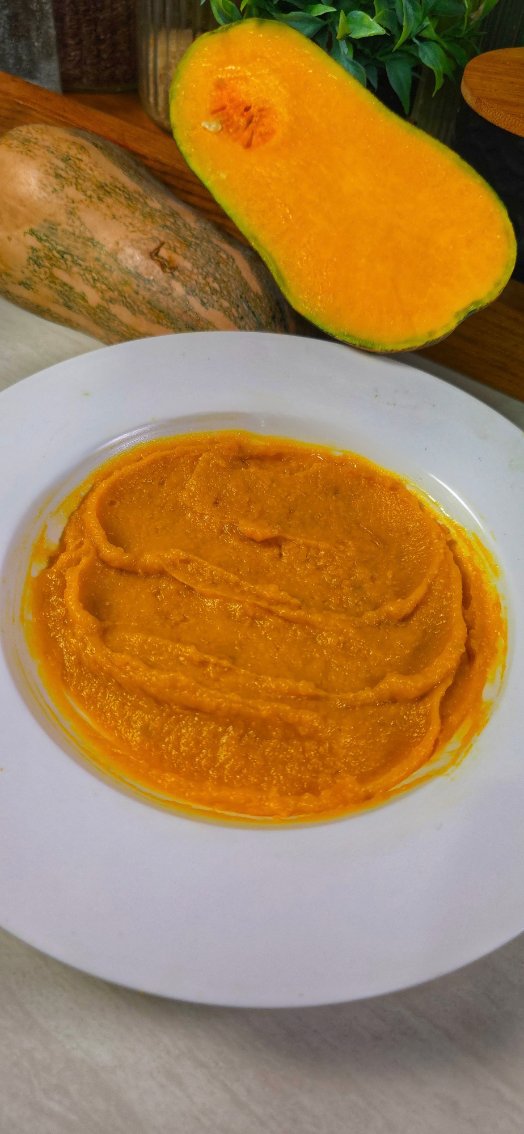
Roasted Butternut Peanut Pumpkin Puree is the kind of recipe that looks almost too plain on paper and then surprises you in the bowl. Two ingredients. One oven. No oil, no cream, no sugar, no spices. What you get instead is the honest flavor of the squash, concentrated by dry heat until its natural sugars deepen and its texture turns dense and silky. If you have ever opened a can of pumpkin puree and found it watery, flat, or oddly metallic, this is the antidote.
The pumpkin itself does most of the work here, so choosing well matters. Butternut peanut pumpkin is a firm, dense variety with deep orange flesh and a flavor that sits somewhere between sweet potato and roasted chestnut. In Trinidad and Tobago, pumpkin shows up in everything from curried pumpkin to pumpkin talkari, and home cooks here know that firm, dry-fleshed varieties hold up far better than the soft, watery ones sold for carving. If you cannot find butternut peanut pumpkin, any firm squash or pumpkin with tight, dry flesh will behave similarly. Kalabaza, butternut, buttercup, and red kuri all roast beautifully. Avoid anything labeled carving pumpkin, because the flesh is stringy and bland.
The technique is simple but not careless. Cutting the pumpkin into small, even cubes gives you more surface area, which means more browning and more evaporation. Spreading those cubes in a single layer on a parchment-lined tray lets them roast instead of steam. Flipping them once halfway through encourages both sides to dry and caramelize. The cubes are ready when a fork slides in with no resistance and the edges look slightly leathery. That visual cue matters more than the clock, because denser varieties can take twice as long as softer ones.
Then comes the blending. Adding water one tablespoon at a time is the difference between a puree that is smooth and one that is soupy. You want just enough liquid to get the blades moving, no more. For this batch, about a quarter cup did the job. The finished puree is thick enough to hold its shape on a spoon, with a warm, nutty aroma and a clean, sweet finish that tastes like the pumpkin and nothing else.
This roasted butternut peanut pumpkin puree earns its place in the kitchen because it is a blank canvas that still tastes like something. Stir it into soup for body. Fold it into pancake or muffin batter. Thin it for a pasta sauce, or simmer it down further and sweeten it lightly to make pumpkin syrup for cocktails, coffee, or drizzling over pancakes. It also makes a gentle first food for babies and a reliable swap anywhere a recipe calls for canned pumpkin. Make a big batch, portion it, and freeze it. You will reach for it far more often than you expect.
INGREDIENT DETAILS
Butternut peanut pumpkin (3 lbs, or any firm squash or pumpkin): This is the entire recipe, so its quality decides everything. Butternut peanut pumpkin has dense, deep orange flesh with a lower water content than most supermarket pumpkins, which means it roasts into a concentrated, nutty sweetness rather than a watery mash. Its aroma while roasting is warm and faintly sweet, almost like toasted hazelnut. The flesh should feel heavy and firm when you press it, with no soft spots or hollow sound when tapped.
Water (about ¼ cup, added 1 tablespoon at a time): Water is not a flavor ingredient here, it is a texture tool. It releases the puree from the blender blades and adjusts consistency without dulling the roasted flavor the way stock, milk, or cream would. Add it slowly, because a puree that is too thin cannot be thickened again without cooking off moisture. For sauces and syrups, keep it thick. For soups and batters, a looser puree works fine.
INGREDIENT ALTERNATIVES
Main Recipe Ingredients: Butternut peanut pumpkin, Water.
Alternatives:
Butternut peanut pumpkin: Any firm, dry-fleshed squash or pumpkin works well. Try butternut, buttercup, red kuri, kabocha, or calabaza. Avoid carving pumpkins and any variety with stringy, watery flesh. If using a softer squash, expect a shorter roast time and more moisture released on the tray.
Water: No substitute needed. If you want a richer puree for soups or sauces, you can blend with unsalted vegetable stock or coconut milk instead, but keep in mind this changes the flavor and the neutral character of the puree.
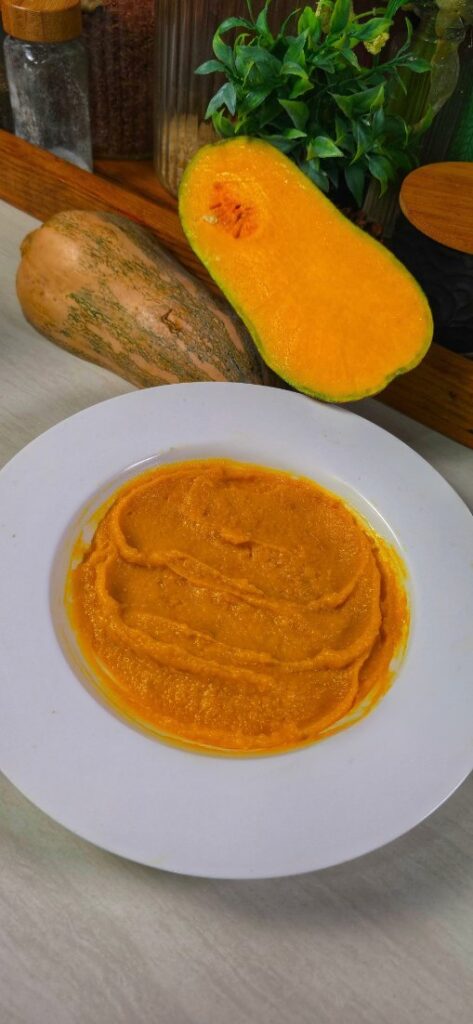
Roasted Pumpkin Puree
Description
This roasted butternut peanut pumpkin puree is a two-ingredient base made by roasting cubes of firm pumpkin until the edges dry and the centers turn tender, then blending them with nothing but a little water. It is smooth, gently sweet, and versatile enough for soups, sauces, baking, and even syrup.
Ingredients
Instructions
-
Preheat the oven to 400°F (205°C).
-
Cut the pumpkin in half, scoop out the seeds, and peel away the skin. Cut the flesh into small, even cubes, roughly one inch each.
-
Line a baking tray with parchment paper. Spread the cubes in a single layer with space between them so they roast rather than steam. No oil is needed for this recipe.
-
Roast for 25 to 40 minutes, checking at the 25 minute mark. The cubes are done when a fork slides in with no resistance and the edges look lightly dried. Flip once halfway through so they dry evenly.
-
Remove from the oven and let the cubes sit for 10 minutes so they stop steaming.
-
Transfer the roasted cubes to a blender or food processor. Blend, adding water 1 tablespoon at a time, until the puree is smooth and thick. About ¼ cup was used for this batch.
-
Use immediately, or store as directed below.
Note
On water: If the puree feels thick or the blender is struggling, add water 1 tablespoon at a time until it moves freely. Remember that added water thins the puree, which is ideal for sauces but means you may need to simmer it down longer if you are making syrup.
On squash and pumpkin varieties: Denser varieties like butternut peanut pumpkin take longer to roast and lose less moisture, while softer varieties cook faster and release more liquid. Always test with a fork rather than relying on the clock. Cooking times are a guide, not a rule.
On storage: Refrigerate the puree in an airtight container for up to 5 days. For longer storage, freeze in portioned bags or ice cube trays for up to 3 months. Thaw overnight in the fridge or gently over low heat.
On using the puree: This is a neutral base, so season it when you use it, not before. It works in soups, curries, pancake and muffin batters, pasta sauces, baby food, and pumpkin syrup for coffee or cocktails.
On roasting without oil: Parchment paper prevents sticking, but if your tray is dark or thin, the cubes may brown faster on the bottom. Check earlier and move them around if needed.
