

Gingerbread cookies were not a part of my Christmas goodies as a child, but as an adult, they have certainly become a fast fave. These cookies boast a delightful blend of molasses and aromatic spices, creating a comforting flavor that evokes cozy memories. With their crisp edges and soft centers, they are perfect for sharing with friends and family. So, let’s dive into this festive recipe and fill your home with the irresistible scent of freshly baked gingerbread.
INGREDIENT DETAILS
Cookie Ingredients
- All-Purpose Flour (3 ¼ cups):
- Role: Provides structure to the cookies.
- Details: A versatile flour made from a blend of hard and soft wheat, it contains moderate protein levels, which helps with gluten formation, aiding in the cookie’s texture.
- Butter/Margarine (¾ cup, at room temperature):
- Role: Adds richness and flavor, contributes to the texture.
- Details: Butter provides a creamy flavor and tenderness to cookies. Margarine can be used as a substitute for a dairy-free option, but it may alter the flavor slightly.
- White Sugar (1 cup):
- Role: Sweetens the cookies and helps with browning.
- Details: Granulated sugar dissolves easily and creates a light texture in baked goods. It also assists in the caramelization process, giving cookies their golden color.
- Large Egg (1):
- Role: Binds ingredients and adds moisture.
- Details: Eggs provide structure and stability; they also help create a tender cookie due to their fat content. The protein in eggs aids in building the cookie’s structure.
- Molasses (¼ cup):
- Role: Adds moisture, flavor, and color.
- Details: A byproduct of sugar refining, molasses gives a rich, deep flavor and a chewy texture. It also contributes to the cookie’s dark color.
- Ground Ginger (2 ½ teaspoons):
- Role: Adds spiciness and warmth.
- Details: Ginger adds a distinctive flavor and aroma, enhancing the overall taste profile of the cookies.
- Water (1 tablespoon):
- Role: Helps to combine ingredients.
- Details: A small amount of water can help with the mixing process, ensuring that the dry ingredients incorporate smoothly.
- Baking Soda (1 teaspoon):
- Role: Leavening agent.
- Details: Baking soda reacts with acidic ingredients (like molasses) to produce carbon dioxide, which helps the cookies rise and become lighter.
- Vanilla Extract (1 teaspoon):
- Role: Adds flavor.
- Details: Vanilla enhances sweetness and adds complexity to the flavor profile of baked goods.
- Ground Cinnamon (½ teaspoon):
- Role: Adds warmth and sweetness.
- Details: A common baking spice, cinnamon complements the other spices and enhances the overall flavor.
- Ground Cloves (½ teaspoon):
- Role: Adds a strong, aromatic flavor.
- Details: Cloves have a potent flavor; a little goes a long way, contributing to the warm, spiced flavor of the cookies.
- Nutmeg (¼ teaspoon):
- Role: Adds warmth and depth.
- Details: Nutmeg has a unique, slightly sweet flavor that pairs well with other spices, enhancing the cookie’s overall profile.
- Salt (¼ teaspoon):
- Role: Enhances flavor.
- Details: Salt balances sweetness and enhances the flavors of the other ingredients.
- Allspice (Pinch):
- Role: Adds a complex flavor.
- Details: Allspice has a flavor reminiscent of a blend of cinnamon, nutmeg, and cloves. A small amount adds depth to the spice blend.
Glaze Ingredients
- Icing Sugar (¼ cup):
- Role: Sweetens and provides a smooth texture.
- Details: Also known as powdered sugar, it dissolves easily and is used for making glazes and frostings.
- Vanilla Extract (½ teaspoon):
- Role: Adds flavor to the glaze.
- Details: Enhances the sweetness and overall taste of the icing.
- Water (½ teaspoon):
- Role: Helps achieve the right consistency for the glaze.
- Details: A small amount of water is sufficient to mix with icing sugar to create a smooth, pourable glaze.
INGREDIENTS & ALTERNATIVES
Cookie Ingredient Alternatives
- All-Purpose Flour (3 ¼ cups):
- Alternative: Whole Wheat Flour (for a nuttier flavor and more fiber) or Gluten-Free Flour Blend (for a gluten-free option).
- Butter/Margarine (¾ cup, at room temperature):
- Alternative: Coconut Oil (for a dairy-free option with a subtle coconut flavor) or Vegetable Shortening (for a non-dairy option).
- White Sugar (1 cup):
- Alternative: Brown Sugar (adds moisture and a deeper flavor) or Coconut Sugar (a lower glycemic index alternative with a caramel flavor).
- Large Egg (1):
- Alternative: Flax Egg (1 tablespoon ground flaxseed mixed with 2.5 tablespoons water, let sit until gel-like) or Chia Egg (1 tablespoon chia seeds mixed with 2.5 tablespoons water).
- Molasses (¼ cup):
- Alternative: Honey (for sweetness, though it will alter the flavor slightly) or Maple Syrup (for a different flavor profile).
- Ground Ginger (2 ½ teaspoons):
- Alternative: Fresh Ginger (use about a tablespoon of grated fresh ginger) or Ground Allspice (for a similar warm spice note).
- Water (1 tablespoon):
- Alternative: Milk (for added richness) or Plant-Based Milk (like almond or soy milk).
- Baking Soda (1 teaspoon):
- Alternative: Baking Powder (use about 3 teaspoons, but it may affect the texture slightly) or Potassium Bicarbonate (if you’re looking for a lower sodium option).
- Vanilla Extract (1 teaspoon):
- Alternative: Almond Extract (for a different flavor) or Vanilla Bean Paste (for a richer vanilla flavor).
- Ground Cinnamon (½ teaspoon):
- Alternative: Pumpkin Pie Spice (for a blend of warm spices) or Cardamom (for a more fragrant flavor).
- Ground Cloves (½ teaspoon):
- Alternative: Allspice (for a similar flavor profile) or Nutmeg (a bit milder).
- Nutmeg (¼ teaspoon):
- Alternative: Ground Ginger (for warmth) or Mace (the outer covering of nutmeg with a similar flavor).
- Salt (¼ teaspoon):
- Alternative: Sea Salt (for a different mineral profile) or Soy Sauce (in savory cookies, but use sparingly).
- Allspice (Pinch):
- Alternative: Five-Spice Powder (for a unique blend) or a mix of cinnamon, nutmeg, and cloves.
Glaze Ingredient Alternatives
- Icing Sugar (¼ cup):
- Alternative: Confectioners’ Sugar (same as icing sugar) or Blended Coconut Sugar (for a less processed option).
- Vanilla Extract (½ teaspoon):
- Alternative: Maple Extract (for a different flavor) or Almond Extract (for a nutty flavor).
- Water (½ teaspoon):
- Alternative: Milk (for a creamier glaze) or Lemon Juice (for a tangy flavor).
These alternatives can help you adjust the recipe based on dietary needs, preferences, or what you have on hand.
GINGERBREAD COOKIES
Description
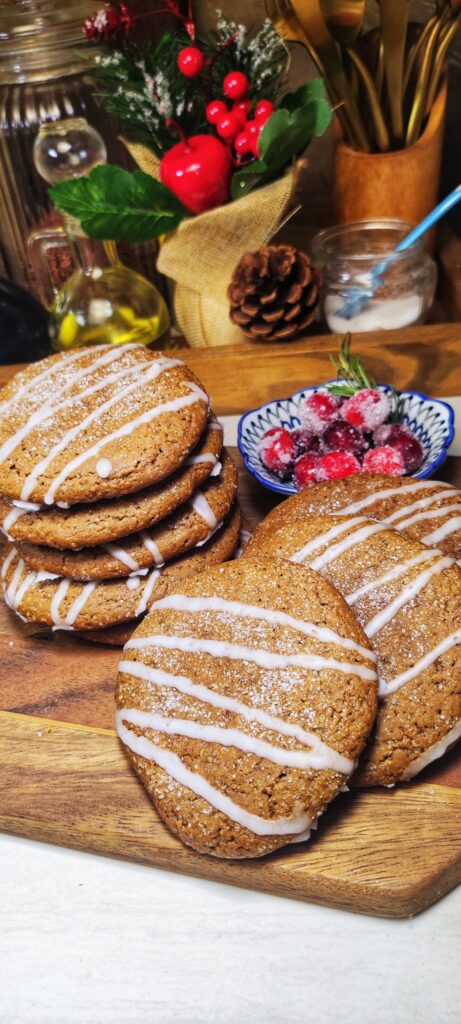
Gingerbread cookies are such a medley of warm comforting flavors perfectly infused with the rich taste of molasses and spiced with ginger, cinnamon, and cloves, these cookies strike a perfect balance between sweetness and spice, complemented by a hint of vanilla.With crisp edges and a soft, chewy center, each bite melts in your mouth. Their dark to golden-brown color and slight cracks make them visually appealing, while a glossy white glaze adds an elegant touch.
Ingredients
Instructions
-
Pre-heat oven to 325°F
-
In a large mixing bowl, cream together softened butter, egg, and sugar until fluffy. Then mix in the molasses.
-
Mix in your water, spices, and baking soda, mixing well until smooth.
-
Add the flour and, using a spoon, mix well until fully incorporated. Using a medium-sized spoon or ¼ measuring cup, scoop the batter, roll it into a ball, and place it on a parchment-lined baking sheet. I got 20 cookies; be sure to leave enough room for each cookie to spread.
-
Using the back of your measuring cup or something with a flat surface lightly dusted with flour, press down on the cookie dough until flattened into a midsized cookie, approximately ¼ inch in thickness.
-
Sprinkle granulated sugar onto the cookies and bake in a preheated oven for 10-15 minutes until the edges are crisp but the middle of the cookie is still slightly soft to the touch.
-
Place on a wire rack to cool for 25-30 mins
-
In a small mixing bowl, add icing sugar, water, and vanilla, and mix together. Place the mixture into a small sandwich bag or a piping bag and pipe onto cookies diagonally, forming lines.
-
Let the cookies sit for 8-12 minutes until the frosting has set before you enjoy.
Note
. Ingredient Temperature:
- Ensure that the butter is at room temperature for easier creaming with sugar. This will help create a light and fluffy texture in your cookies.
- Measuring Flour:
- When measuring flour, spoon it into your measuring cup and level it off with a knife. Avoid scooping directly from the bag, as this can compact the flour and lead to dry cookies.
- Mixing:
- Be careful not to overmix the dough after adding the flour. Mix just until combined to avoid tough cookies.
- Chilling the Dough:
- If you find the dough too sticky to handle, consider chilling it in the refrigerator for about 30 minutes. This can help with shaping and prevent the cookies from spreading too much while baking.
- Baking Time:
- Keep an eye on the cookies as they bake. The baking time may vary depending on your oven. Look for edges that are slightly crisp but with a soft center.
- Cooling:
- Allow the cookies to cool on the baking sheet for a few minutes before transferring them to a wire rack. This helps them set and makes them easier to move without breaking.
- Piping the Glaze:
- If using a sandwich bag to pipe the glaze, cut a small corner of the bag for more control. You can also use a piping bag with a fine tip for more intricate designs.
- Storage:
- Store the cookies in an airtight container at room temperature for up to a week. For longer storage, consider freezing them. Place layers of cookies between parchment paper and store in a sealed bag or container.
- Flavor Variations:
- Feel free to experiment with additional spices or mix-ins like chocolate chips, nuts, or dried fruit for added texture and flavor.
- Glaze Adjustments:
- Adjust the consistency of the glaze by adding more icing sugar for thickness or more water for a thinner glaze based on your preference.
These notes should help you achieve the best results and make your baking experience enjoyable! Happy baking.
