TRINI CHINESE STYLE CHICKEN (OVEN ROASTED)
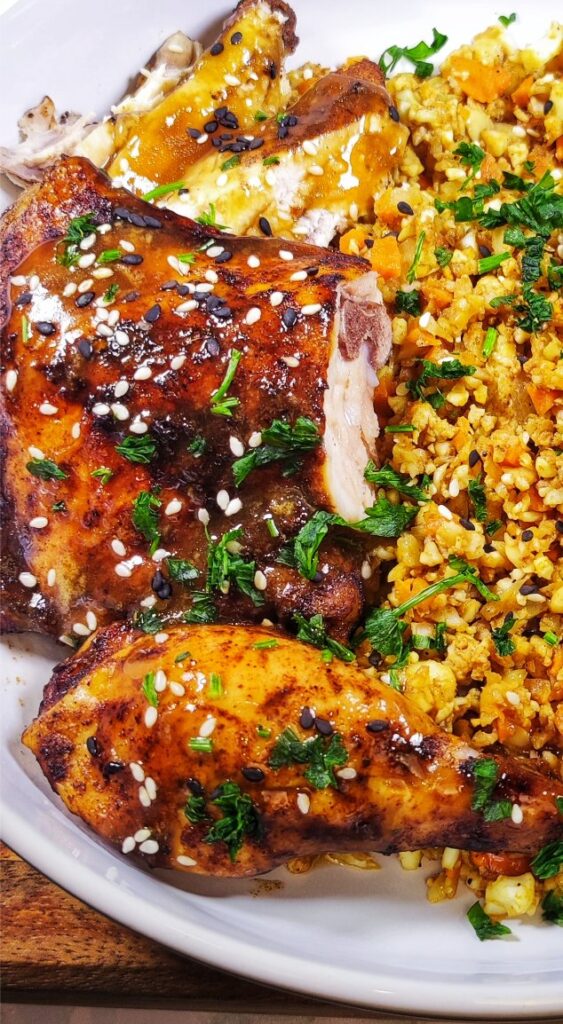
When you go to the Chinese restaurant and ask for "Rice, Noodles, Chow Mein, and Chicken"… this is that chicken! Infused with vibrant flavors and a unique Caribbean twist, this Trini Chinese Style Chicken will transport you straight to your favorite local chinese restaurant.
Imagine succulent pieces of chicken marinated in a savory blend of soy sauce, ginger, and spices, then cooked to perfection until golden brown and tender. Each bite bursts with the rich umami flavors that make Chinese cuisine so irresistible, while the warmth of Caribbean spices adds a delightful twist.
Whether you’re serving it over fluffy fried rice, tossing it with noodles, or enjoying it with a side of chow mein, this dish is guaranteed to be a hit at your table. Join me as we recreate this beloved classic, bringing the flavors of the Chinese restaurant right into your home kitchen.
Ingredient Details
Chicken
- Description: A versatile protein that serves as the main ingredient. The skin adds flavor and moisture during cooking.
- Substitutes: Bone-in chicken thighs or drumsticks can be used for juicier meat. For a lighter option, skinless chicken breasts work well but may require shorter cooking times.
Grated Ginger
- Description: Adds a warm, spicy, and aromatic flavor. Ginger also has anti-inflammatory properties.
- Substitutes: Ground ginger can be used, but use half the amount since it's more concentrated.
Oyster Sauce
- Description: A savory sauce made from oyster extracts, sugar, and salt. It provides umami flavor and richness.
- Substitutes: Hoisin sauce or soy sauce mixed with a bit of sugar can be used for a different flavor.
Dark Soy Sauce
- Description: A thicker, sweeter soy sauce that adds color and depth to dishes. It’s less salty than regular soy sauce.
- Substitutes: Light soy sauce or a combination of regular soy sauce with a bit of molasses can work in a pinch.
5 Spice Powder
- Description: A spice blend that typically includes star anise, cloves, Chinese cinnamon, Sichuan peppercorns, and fennel seeds. It adds a complex flavor profile.
- Substitutes: You can create a homemade blend or use a combination of cinnamon and five-spice powder to mimic the flavor.
Minced Garlic
- Description: Provides a pungent, savory flavor that enhances the dish. Fresh garlic is more potent than garlic powder.
- Substitutes: Garlic powder can be used, but use about 1/8 teaspoon for every clove of garlic.
Garlic Powder
- Description: A dried form of garlic that provides a milder flavor. It’s convenient for seasoning.
- Substitutes: Fresh garlic can be used, but it’s more concentrated, so adjust the amount accordingly.
Onion Powder
- Description: A dehydrated form of onion that adds sweetness and depth without the texture of fresh onions.
- Substitutes: Fresh onions can be used; finely chop and sauté them before adding to the dish.
Black Pepper
- Description: Adds heat and flavor. Freshly ground black pepper has a stronger taste than pre-ground.
- Substitutes: White pepper can be used for a milder taste, though it has a different flavor profile.
Salt
- Description: Enhances all flavors in the dish. It’s crucial for seasoning.
- Substitutes: Sea salt or kosher salt can be used, but adjust amounts based on saltiness preference.
Water
- Description: Used to dilute the marinade and create the sauce. It helps balance flavors.
- Substitutes: Chicken broth can add extra flavor to the sauce.
Sugar (optional)
- Description: Balances the savory flavors and can help caramelize the chicken during cooking.
- Substitutes: Honey or agave syrup can be used for a natural sweetener.
Cornstarch
- Description: Acts as a thickening agent for the sauce. It creates a smooth, glossy finish.
- Substitutes: Arrowroot powder or all-purpose flour can be used, but may require different cooking times.
Sesame Oil
- Description: Adds a rich, nutty flavor and aroma. It’s often used in Asian cuisine.
- Substitutes: Peanut oil or vegetable oil can work, but won't provide the same flavor.
Soy Sauce
- Description: A staple in Asian cooking, soy sauce adds umami and saltiness. It comes in various forms (light, dark, low-sodium).
- Substitutes: Tamari (gluten-free soy sauce) or coconut aminos can be used for a soy-free option.
These details can help you understand the role each ingredient plays in the recipe and suggest alternatives if needed. Enjoy your cooking!
Ingredient Alternatives
Chicken
- Alternatives:
- Turkey (thighs or breasts)
- Tofu (for a vegetarian option)
- Tempeh (for a plant-based protein)
Grated Ginger
- Alternatives:
- Ground ginger (use half the amount)
- Ginger paste (equal amount)
Oyster Sauce
- Alternatives:
- Hoisin sauce
- Soy sauce mixed with a little sugar
- Mushroom sauce (for a vegetarian option)
Dark Soy Sauce
- Alternatives:
- Light soy sauce (use less for saltiness)
- Regular soy sauce with a splash of molasses
5 Spice Powder
- Alternatives:
- Homemade blend (cinnamon, star anise, cloves, fennel, and Sichuan peppercorns)
- Garam masala (for a different flavor profile)
Minced Garlic
- Alternatives:
- Garlic powder (1/8 teaspoon for each clove)
- Shallots (finely minced)
Garlic Powder
- Alternatives:
- Fresh garlic (1 clove for every 1 tsp of garlic powder)
- Garlic salt (reduce added salt)
Onion Powder
- Alternatives:
- Fresh onions (finely chopped)
- Leeks (finely chopped)
Black Pepper
- Alternatives:
- White pepper (milder flavor)
- Paprika (for a different kind of heat)
Salt
- Alternatives:
- Sea salt or kosher salt
- Low-sodium soy sauce (adjust overall salt)
Water
- Alternatives:
- Chicken broth (adds extra flavor)
- Vegetable broth (for a vegetarian option)
Sugar (optional)
- Alternatives:
- Honey or maple syrup
- Agave nectar
Cornstarch
- Alternatives:
- Arrowroot powder (same amount)
- All-purpose flour (may need more for thickening)
Sesame Oil
- Alternatives:
- Peanut oil
- Canola oil (less flavor but works well for cooking)
Soy Sauce
- Alternatives:
- Tamari (gluten-free)
- Coconut aminos (lower sodium, soy-free)
These alternatives should help you customize the recipe based on your preferences or what you have on hand.
Savor the flavors of homemade Trini-Chinese Restaurant-Style Chicken, a dish that brings your favorite local chinese food order right to your kitchen. Marinated in a rich blend of oyster sauce, dark soy sauce, and aromatic spices, this chicken is baked to perfection until golden brown and tender.Each bite is enveloped in a glossy, savory sauce with sweet and umami notes, enhanced by ginger, garlic, and five-spice powder. Garnished with fresh chives and sesame seeds, this dish is not only delicious but also visually appealing.
- 1 3lb Chicken (washed & cleaned)
- 1 - tbsp grated Ginger
- 2 - tbsp Oyster Sauce
- 1 - tbsp Dark Soy Sauce
- 1 - tbsp 5 Spice Powder
- 2 - tsp Garlic, minced
- 1 - tsp Garlic Powder
- 1 - tsp Onion Powder
- 1/4 - tsp Black Pepper
- 1 - tsp Salt
- **Sauce**
- 3/4 - cup plus 1 tbsp Water
- 1 - tsp Sugar (optional)
- 1 - tsp Cornstarch
- 1 - tsp Sesame Oil
- 1 - tsp Soy Sauce
- 1 In a small mixing bowl, combine the oyster sauce, grated ginger, dark soy sauce, 5 spice powder, garlic powder, minced garlic, onion powder, black pepper, and salt. Mix well until it forms a marinade.
- 2
Place the chicken quarters in a large bowl and rub the marinade into the chicken thoroughly. Set aside to marinate for at least an hour or overnight for best results.- 3
Preheat the oven to 400°F (200°C).- 4
Arrange the marinated chicken on a greased baking tray and cover with foil. Bake in the preheated oven for 30-40 minutes covered, then remove the foil and bake for an additional 10 minutes. The chicken is fully cooked when the internal temperature reaches 165°F (74°C) on a meat thermometer.- 5
While the chicken is baking, stir in cornstarch into water, pour this mixture into a small saucepan and place it on the stove over low to medium heat. Then add the sesame oil, sugar (if using), and soy sauce. Mix well.- 6
Allow to simmer until liquid begins to thicken, continue simmering for an additional 5 minutes before removing it from the heat.- 7
Once the chicken is cooked, remove it from the oven and chop it into smaller pieces as desired. Drizzle the sauce over the chicken.- 8
Garnish with chives, sesame seeds, or other toppings of your choice and serve hot.- 9
#### If Cooking in an Air Fryer- 10
Place the chicken smooth side down in the air fryer and cook at 180°C (356°F) for 15 minutes.- 11
After 15 minutes, flip the chicken smooth side up and cook for an additional 15 minutes or until the internal temperature reaches 165°F (74°C). Remove from the air fryer, chop into smaller pieces as desired, and top with sauce.Note- Marination: For the best flavor, marinate the chicken overnight. If you're short on time, even 1 hour can make a difference.
- Oyster Sauce: If you don’t have oyster sauce, you can substitute with hoisin sauce for a slightly different flavor profile.
- 5 Spice Powder: This spice blend adds depth; adjust the amount to your taste if you prefer a milder or stronger flavor.
- Chicken Quarters: If using bone-in chicken thighs or drumsticks, adjust cooking time slightly as they may take a bit longer to cook through.
- Sauce Thickness: If you prefer a thicker sauce, allow it to simmer longer. If it gets too thick, add a bit of water to reach your desired consistency.
- Garnishes: Fresh herbs like cilantro or green onions can add a nice touch. Sesame seeds provide great texture and flavor.
- Serving Suggestions: Serve with steamed rice or noodles to soak up the delicious sauce. Steamed vegetables can also complement the dish well.
- Storage: Leftovers can be stored in an airtight container in the refrigerator for up to 3 days. Reheat in the oven or microwave until warmed through.
- Air Fryer Tips: Ensure chicken pieces are not overcrowded in the air fryer for even cooking. Check the internal temperature in the thickest part of the chicken.
chinese style chicken, chinese roasted chicken, oven roasted chicken, trinn chicken, - 2