Thai Red Coconut Curry Poached Fish
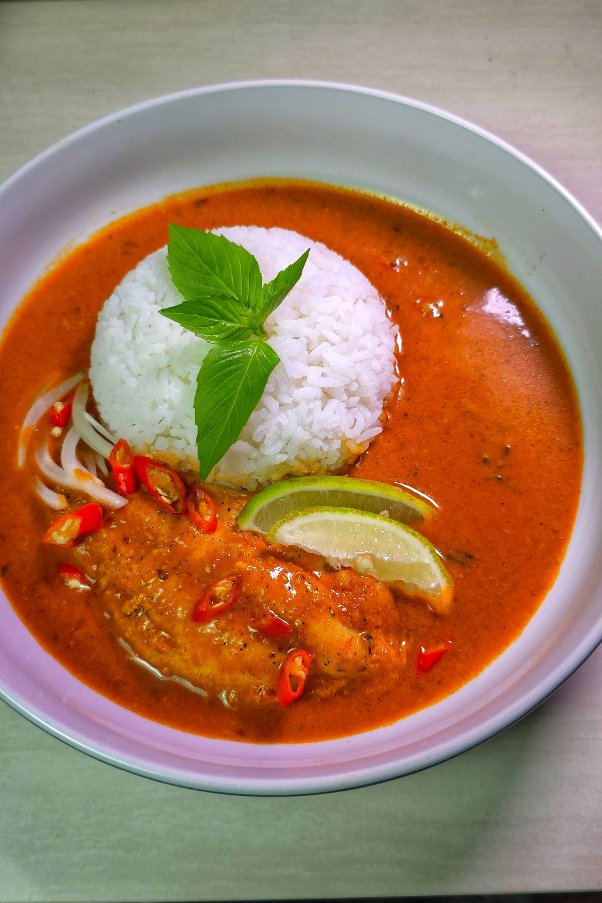
This Thai red coconut curry poached fish simmers tender white fish fillets in a rich, aromatic sauce built from red curry paste, coconut cream, and a pureed base of onion, garlic, and ginger. Finished with star anise, fish sauce, and Thai basil, it is a balanced, fragrant dish that comes together in one pan.
INTRODUCTION
Thai Red Coconut Curry Poached Fish is a one-pan dish that leans on the gentle cooking method of poaching to keep white fish moist and flaky while it absorbs the deep, aromatic flavors of a red coconut curry sauce. Unlike frying, which can dry out delicate fillets, poaching lets the fish cook slowly in liquid, staying tender and yielding while the sauce reduces and concentrates around it. The result is a bowl of fragrant curry with soft fish, a creamy coconut body, and a warm, spiced finish from star anise and chili.
The sauce starts with a pureed base of onion, garlic, and ginger. Blending these aromatics into a paste rather than chopping them fine gives the sauce a smoother body and releases their oils more evenly when they hit the hot pan. Once fragrant, red curry paste goes in and cooks briefly to bloom its flavors before the coconut cream and stock are added. This order matters. Cooking the paste in oil first deepens its color and tempers its raw edge, while adding coconut cream slowly ensures it incorporates fully rather than splitting.
Star anise is the quiet star of this dish. Its warm, licorice-like aroma pairs naturally with coconut and red curry, adding a subtle sweetness that rounds out the heat. Fish sauce, despite its strong smell on its own, dissolves into the sauce and delivers a savory depth that salt alone cannot replicate. Thai basil, added near the end, brings a fresh, slightly peppery note that lifts the richness of the coconut. If sweet basil is what you have, it works, though the flavor will be milder.
The fish itself is simple. Any firm white fish works here, including snapper, cod, tilapia, or grouper, all of which are common in Trinidad and Tobago markets. A quick rinse with vinegar or lime in water removes some of the surface freshness and any lingering smell, then the fillets are patted dry and seasoned lightly. They poach in the simmering sauce for just five minutes, enough to cook through without breaking apart.
Serve this Thai red coconut curry poached fish over jasmine rice with lime wedges, fresh basil, sliced chili, and thin rings of raw onion. The lime cuts through the coconut, the raw onion adds crunch and bite, and the chili lets each person adjust the heat at the table. It is a complete meal in one pan, ready in about thirty minutes, and it reheats gently the next day without losing the texture of the fish.
INGREDIENT DETAILS
White fish fillets (4) Firm white fish like snapper, cod, grouper, or tilapia holds its shape during poaching and stays moist. The flesh should be mild and slightly sweet, with a clean smell and firm spring when pressed. Cutting each fillet in half gives you smaller pieces that cook evenly and fit neatly in the pan.
Salt and black pepper (1 tsp, plus more to taste): Salt seasons the fish from the outside in and helps it hold moisture during poaching. Black pepper adds a mild warmth and a faint bite that balances the richness of the coconut sauce.
Vegetable stock (1¼ cups): Forms the liquid base of the curry and carries the flavors of the aromatics, curry paste, and spices. Use a mild, unsalted stock so it does not overpower the coconut or the fish.
Thai red coconut curry paste (5 to 6 tbsps): This is the backbone of the sauce, delivering heat, color, and a complex blend of lemongrass, galangal, kaffir lime, and dried chili. Cooking it briefly in oil wakes up its aromatics and deepens its flavor before the liquids go in.
Coconut cream (½ cup): Thicker and richer than coconut milk, coconut cream gives the sauce body and a naturally sweet, creamy finish that softens the heat of the curry paste. It also helps the sauce cling to the fish and the rice.
Onion (1 medium, roughly chopped): Blended into the aromatic paste, onion adds sweetness and depth. Rough chopping is fine since it will be pureed, and its mild pungency mellows once cooked in oil.
Garlic (4 cloves): Brings a sharp, savory punch that grounds the sauce. Blended with the onion and ginger, it spreads evenly through the base instead of leaving pockets of raw garlic flavor.
Ginger (2 tbsps, grated): Adds a warm, slightly spicy bite and a fresh aroma that cuts through the coconut. Grated ginger blends more smoothly into the paste than chopped pieces.
Fish sauce (2 tbsps): Provides deep, savory umami and the saltiness that ties the whole sauce together. Its strong aroma fades during cooking, leaving only a rounded, savory note behind.
Star anise seeds (1 tbsp, or crushed): Adds a gentle licorice-like warmth that complements coconut and red curry. Crushing the seeds releases more of their oils, so the flavor spreads through the sauce rather than staying in one spot.
Thai basil or sweet basil (5 to 6 large leaves, chopped): Thai basil has a peppery, slightly anise-like flavor that stands up to the curry. Added near the end, it keeps its aroma and a bit of its bright color. Sweet basil works as a milder substitute.
Red chili (1, chopped, or to taste): Brings fresh heat and a bright, vegetal note. Leaving the seeds in increases the heat, so remove them if you prefer a milder sauce.
Olive oil (2 tbsps): Used to sauté the aromatics and bloom the curry paste. It carries the fat-soluble flavors of the spices and prevents the paste from scorching.
Cooked jasmine rice (3 cups): The floral, slightly sticky grains soak up the curry sauce and balance its richness. Day-old rice works well here, as it holds up better under the sauce.
Lime wedges: Squeezed at the table, lime adds a bright acidity that cuts through the coconut cream and lifts the whole dish.
Fresh basil: A final scatter of fresh basil adds aroma and a pop of green color just before eating.
Chopped chili slices: Let each person add heat at the table, so the dish suits different tolerance levels.
Thinly sliced onions: Raw onion rings add crunch and a sharp bite that contrasts the soft fish and creamy sauce.
INGREDIENT ALTERNATIVES
Main Recipe Ingredients: White fish fillets, Salt and black pepper, Vegetable stock, Thai red coconut curry paste, Coconut cream, Onion, Garlic, Ginger, Fish sauce, Star anise seeds, Thai basil or sweet basil, Red chili, Olive oil, Cooked jasmine rice, Lime wedges, Fresh basil, Chopped chili slices, Thinly sliced onions.
Alternatives:
White fish fillets: Any firm white fish works, including snapper, cod, grouper, tilapia, or halibut. Avoid oily fish like mackerel or salmon, which overpower the sauce.
Salt and black pepper: No substitute needed.
Vegetable stock: Chicken stock or water with a pinch of salt can be used. Use unsalted versions to control the final seasoning.
Thai red coconut curry paste: Green curry paste works for a different color and a fresher, hotter profile. Massaman curry paste gives a milder, sweeter result.
Coconut cream: Full-fat coconut milk can be used, though the sauce will be slightly thinner. For a lighter version, use light coconut milk and simmer a few minutes longer to thicken.
Onion: Shallots or leeks can replace the onion for a milder, sweeter base.
Garlic: Garlic paste works in the same quantity. Garlic powder is not recommended here since it does not blend into the paste the same way.
Ginger: Galangal is the more traditional choice and gives a sharper, more citrusy note. Ginger paste works in a pinch.
Fish sauce: Soy sauce or tamari can substitute for a vegetarian version, though the flavor will be less complex. Add a pinch of salt to compensate.
Star anise seeds: Whole star anise pods can be used, about one pod, removed before serving. Chinese five spice is a reasonable substitute in a pinch.
Thai basil or sweet basil: Holy basil adds a more peppery, clove-like note. Regular sweet basil is the mildest option.
Red chili: Any fresh red or green chili works. Chili flakes or cayenne can be used, added to taste.
Olive oil: Coconut oil, vegetable oil, or any neutral cooking oil works.
Cooked jasmine rice: Basmati, brown rice, or cauliflower rice all work as a base. Jasmine complements the Thai flavors best.
Lime wedges: Lemon wedges work, though lime is more traditional with Thai flavors.
Fresh basil: Cilantro or mint can be scattered instead for a different fresh note.
Chopped chili slices: Chili oil or sriracha can be offered at the table instead.
Thinly sliced onions: Sliced shallots or scallions give a milder crunch.
If you enjoyed this recipe, you may also enjoy my recipe for SHRIMP & THAI RED CURRY NOODLE BOWL

This Thai red coconut curry poached fish simmers tender white fish fillets in a rich, aromatic sauce built from red curry paste, coconut cream, and a pureed base of onion, garlic, and ginger. Finished with star anise, fish sauce, and Thai basil, it is a balanced, fragrant dish that comes together in one pan.
- 4 white fish fillets
- 1 tsp salt and black pepper
- 1 ¼ cups vegetable stock
- 5 - 6 tbsps Thai red coconut curry paste
- ½ cup coconut cream
- 1 medium onion, roughly chopped
- 4 cloves garlic
- 2 tbsps ginger, grated
- 2 tbsps fish sauce
- 1 tbsp star anise seeds, or crushed
- 5 - 6 large leaves Thai basil or sweet basil
- 1 red chili, chopped, or to taste
- 2 tbsps olive oil
- 3 cups cooked jasmine rice
- Lime wedges
- Fresh basil
- Chopped chili slices
- Thinly sliced onions
- 1 Rinse the fish slices with vinegar or lime submerged in a bowl of water to remove some of the surface freshness, then pat dry.
- 2
Place the fish in a bowl, season with salt and black pepper, and set aside.- 3
Add the onion, garlic, and grated ginger to a small food processor and puree until you get a smooth paste.- 4
Heat the olive oil in a medium-large saucepan over medium-high heat. Let it heat slightly, then add the pureed aromatics, chili, and star anise. Mix well for about 1 minute until fragrant.- 5
Add the curry paste and cook, stirring consistently, for 30 to 40 seconds.- 6
Pour in the coconut cream and stir well until fully incorporated.- 7
Mix in the vegetable stock and fish sauce, then bring to a simmer. Lower the heat and let it simmer for 8 to 9 minutes.- 8
Add the chopped basil and stir, then add the fish and simmer for a further 5 minutes on low until the fish is cooked through and flakes easily.- 9
Turn off the heat and let the pan sit for 4 to 5 minutes before serving alongside jasmine rice, lime wedges, fresh basil, chopped chili, and sliced onions.NoteAny firm white fish works well here. Snapper, cod, grouper, and tilapia are all good choices. Avoid oily fish like salmon or mackerel, which overpower the curry.
Different brands vary in heat and saltiness. Start with 5 tablespoons, taste the sauce after it simmers, and add more if needed.
If using whole pods instead of seeds, add one pod and remove it before serving so the flavor does not become too strong.
If the sauce looks like it is splitting, lower the heat and stir gently. High heat can cause coconut cream to separate.
Fish sauce is salty, so taste before adding extra salt. If using soy sauce instead, adjust the amount to taste.
Store leftovers in an airtight container in the fridge for up to 2 days. Reheat gently on low heat, as high heat will break up the fish.
The lime, raw onion, and fresh chili at the table are not optional garnishes. They balance the richness of the coconut and bring the dish together.
Thai red curry fish, coconut curry poached fish, Thai fish curry recipe, poached white fish, red curry coconut sauce, Thai basil fish, star anise curry, one pan fish curry, jasmine rice fish curry, easy Thai curry, white fish recipe, Thai red coconut curry - 2