Pommecythere Talkari (Pommecythere Anchar)
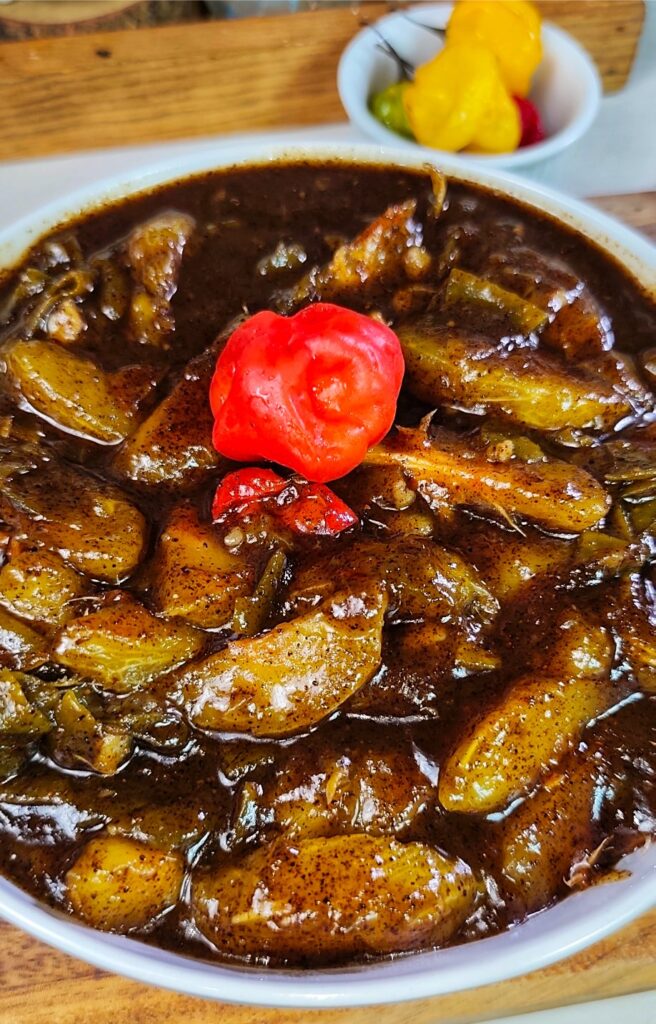

Pommecythere Talkari, also known as Pommecythere Anchar is one of those unmistakably Caribbean-Indian treats that bursts with both flavor and nostalgia. Made with half-ripened pommecythere, this talkari combines sweet, spicy, and tangy notes in every glossy, masala-coated bite. If you grew up in Trinidad and Tobago, you’ve likely seen it bubbling away at Diwali, Eid, or even Sunday lunch gatherings, where it takes pride of place beside rice, dhal, and curry.
What makes this dish truly special is how it transforms a humble tropical fruit into something deeply flavorful. The pommecythere softens as it cooks, releasing its tart juices into the sugar and spice mixture, which then caramelizes into a sticky glaze that coats each wedge. The scent alone, a mix of garlic, hot pepper, and toasted anchar masala, fills your kitchen with that unmistakable “talkari” aroma that signals comfort and celebration.
This version of pommecythere talkari is the same as the classic masala mango, but swapping in pommecythere gives it a livelier tang and a meatier texture. It’s a pantry-friendly recipe that’s easy to prepare, vegan, and perfect for storing in jars to enjoy later. Serve it warm with fried bake or pholourie, or enjoy it cold as a sweet-spicy side that brings tropical brightness to any meal.
INGREDIENT DETAILS
Pommecythere (Golden Apple)
The star of this dish — firm, half-ripened pommecythere bring tanginess and a hint of sweetness. They soften beautifully while still holding shape.
Vegetable Oil
Used to fry the masala and aromatics, helping release their flavors into the sauce.
Anchar Masala
The heart of the recipe — this spice blend adds deep, earthy, slightly bitter notes that balance the sugar and tang.
Brown Sugar
Caramelizes into the sauce, giving a rich molasses-like sweetness that balances the tart fruit.
Garlic
Adds savory depth and aromatic warmth to the base.
Salt
Balances sweetness and enhances the masala’s complexity.
Hot Pepper
Provides the traditional Trini heat and lifts the dish’s overall flavor. Adjust to taste.
Water
Used to simmer and help the fruit soften and the masala develop into a thick glaze.
INGREDIENT ALTERNATIVES
Pommecythere
Swap 1: Half-ripe mango (for a milder, softer version)
Swap 2: Granny Smith Apples
Vegetable Oil
Swap 1: Mustard oil (for a sharper, traditional Indian-style flavor)
Swap 2: Coconut oil (for a light tropical aroma)
Anchar Masala
Swap 1: Homemade blend of roasted geera, methi, mustard seeds, and amchar masala powder
Swap 2: Garam masala + extra roasted cumin (if anchar masala unavailable)
Brown Sugar
Swap 1: Coconut sugar (for a more caramelized note)
Swap 2: Date Sugar
Garlic
Swap 1: Garlic powder (1 tsp = 2 cloves)
Swap 2: Shallots (for mild sweetness)
Hot Pepper
Swap 1: Scotch bonnet
Swap 2: Chili flakes
Water
No substitute needed
A vibrant Trini-style condiment made with tangy pommecythere simmered in a thick, spiced anchar masala. This sweet-and-spicy talkari captures the perfect balance of heat, tartness, and rich caramelized flavor, ideal for pairing with roti, rice dishes, or even as a chutney-style side.
- 8 medium half-ripened Pommecythere (peeled and cut into wedges, seeds lightly cracked if desired)
- ¼ cup Vegetable Oil
- 6 tbsp Anchar Masala
- 1 ⅔ cups Brown Sugar (adjust to taste, pommecythere are tangier than mangoes)
- 4 cloves Garlic, crushed
- 2 tsp Salt
- Hot Pepper, to taste
- Water, as needed (enough to almost cover fruit in pot)
- 1 Start by washing and halving the pommecythere, then cut each half into wedges, about 8 wedges per fruit. If your knife isn’t sharp enough to crack the seed, use a mallet or the back of a heavy tool to gently tap the knife and break it open.
- 2
In a large, heavy-bottomed pot, heat vegetable oil over medium-high heat. Add crushed garlic and hot pepper, sautéing for about 30 seconds until fragrant. Quickly stir in the anchar masala, garlic and hot pepper. Stir quickly for 30-40 secs to release its aroma, being careful not to let it burn.- 3
Toss in the pommecythere wedges, mixing well to coat each piece in the spiced oil, add sugar and salt . Pour in enough water to nearly cover the and bring to a simmer before covering with lid. Let cook on med-high heat for 25 mins.- 4
Remove the lid, taste, and adjust sweetness or spice to your liking. Continue simmering uncovered for another 10–15 minutes, stirring occasionally. The sauce should thicken and reduce by at least 85%, the sugar should caramelize slightly, and the masala should cling to each wedge in a glossy glaze.- 5
Once the pommecythere are tender and richly coated, remove from heat. Serve warm or cool for a saucy side or cool completely before bottling for later use.NoteFor very sour pommecythere, parboil them for 5–8 minutes before cooking to reduce sharpness.
Add a pinch of roasted geera at the start along with the masala for extra depth.
Store in sterilized glass jars once cooled , keeps refrigerated up to 2 weeks.
Excellent with rotis, dhal and rice, pholourie, or alongside fried fish.
pommecythere talkari, pommecythere anchar, Caribbean anchar recipe, Trini talkari, sweet and spicy fruit chutney, pommecythere recipes, tropical side dishes - 2