Pimento Chive Steamed Snapper
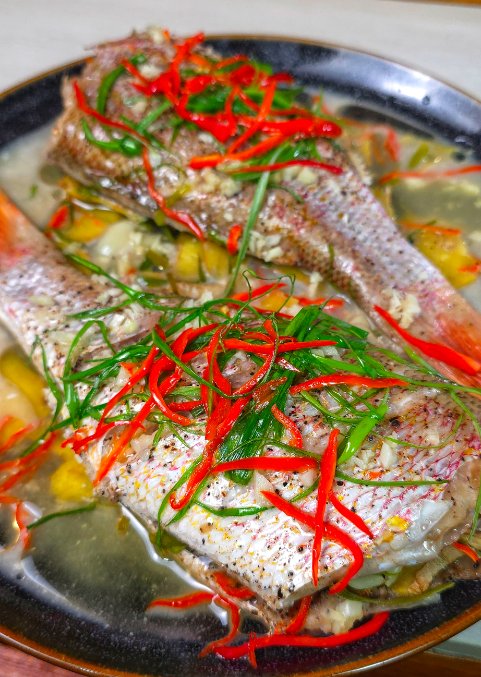

Pimento Chive Steamed Snapper is the kind of dish that lets a fresh fish speak for itself. Instead of frying or heavy seasoning, the fish steams gently over a bed of ginger, pimento peppers, and chives, so the aromatics rise into the flesh rather than sit on top of it. The result is clean, tender fish with a soft perfume of ginger and the mild, fruity heat that red pimento brings to so many Trinidadian kitchens.
Pimento Chive Steamed Snapper came about because of a Cantonese dish I could not stop thinking about. I am not a huge fish lover, but I have always had a soft spot for a good snapper, and lately I have found myself enjoying fish recipes more and more. When I came across soy garlic steamed fish, I knew immediately that it would taste amazing. The recipe was so simple, almost bare, and that is exactly what drew me in.
So I made the decision to trini-fy it. I wanted to bring in some of those Caribbean flavours we all know and love so much, and pimento, chive, and ginger felt like the right place to start. The steaming method stayed, because it is what keeps the fish so tender, but the seasoning underneath and inside the fish became something closer to home.
The coconut milk was the part I was most curious about. Instead of leaving the fish plain, I basted it partway through steaming, and that light, aromatic coconut milk turned out to be the perfect balance to the fish's own flavour. It softened the ginger and pimento without hiding them.
The end result was a flavour fiesta. I stood in my kitchen eating just fish, no sides, dipping it straight into the juices on the plate. This Pimento Chive Steamed Snapper is the kind of dish that does not need much alongside it, though rice or ground provisions will happily soak up everything left behind.
INGREDIENT DETAILS
· Snapper (2 medium-large, cleaned, heads removed): Snapper has firm, sweet white flesh that holds up well to steaming without turning mushy. Ask your fishmonger to clean and scale it, and remove the heads if you prefer a neater plate. The skin helps hold the flesh together during cooking.
· Limes (2): Lime juice is used to wash the fish, which cuts surface bacteria and any lingering fishy smell. The squeezed halves are then rubbed over the skin and cavity for a bright, clean starting point.
· Ginger (2 medium knobs, thinly sliced): Ginger is the backbone aroma here. Layered under the fish, it perfumes the steam, and tucked inside the cavity, it seasons the flesh from within. Thin slices release their oils faster than thick chunks.
· Red pimento peppers (3 medium, crushed, plus extra sliced for topping): Pimento peppers give a mild, fruity heat and a distinctly Trinidadian fragrance. Crushed, they melt into the steaming bed; sliced raw, they add a fresh, crisp finish on top.
· Garlic (8 cloves, 6 crushed and 2 minced): Crushed garlic goes into the steaming bed and cavity, where it softens and sweetens. The minced garlic is held back for the hot oil pour, so it stays sharp and pungent.
· Chives or green onion (4 blades, cut into thin strips): Chives bring a mild onion note and a fresh green colour. Some go under the fish to scent the steam, and the rest go on top just before the oil is poured.
· Garlic powder (1 tsp): Garlic powder distributes evenly through the dry seasoning rub, reaching into the slashes in a way fresh garlic cannot. It also adds a deeper, slightly toasted garlic note.
· Salt (1 1/2 tsp): Salt seasons the fish inside and out and helps draw out moisture so the flesh firms up slightly as it steams. It also balances the sweetness of the coconut milk.
· Black pepper (1/2 tsp): Black pepper adds a warm bite that lifts the milder aromatics. It is kept modest so it does not compete with the pimento.
· Coconut milk (4 tbsp): Basted over the fish partway through steaming, coconut milk adds richness and keeps the exposed flesh moist. It also carries a faint sweetness that rounds out the ginger and garlic.
· Neutral oil (1/4 cup): A neutral oil heats without adding its own flavour, which matters here because the point is to bloom the garlic, chive, and pimento. It must be very hot to release those aromatics on contact.
· Rice or ground provisions (for serving): These soak up the seasoned juices and coconut milk left on the plate, so nothing goes to waste.
INGREDIENT ALTERNATIVES
· Main Recipe Ingredients: Snapper, limes, ginger, red pimento peppers, garlic, chives or green onion, garlic powder, salt, black pepper, coconut milk, neutral oil, rice or ground provisions.
· Alternatives:
· Snapper: Any firm white fish works, such as grouper, redfish, or sea bass. Whole fish is best, but thick fillets can be used with a shorter steaming time.
· Limes: Lemons can be used for washing the fish, though the flavour will be slightly sharper.
· Ginger: No substitute needed.
· Red pimento peppers: Sweet mini peppers or a small amount of mild bell pepper with a pinch of paprika can stand in, though the aroma will be milder.
· Garlic: No substitute needed.
· Chives or green onion: Either can replace the other, and thin slices of shallot work in a pinch.
· Garlic powder: Granulated garlic can be used in the same quantity.
· Salt: Sea salt or kosher salt works, but adjust the quantity if the grain size differs.
· Black pepper: White pepper can be used for a milder, earthier note.
· Coconut milk: Full-fat coconut cream thinned with a little water, or a splash of heavy cream if coconut is not wanted.
· Neutral oil: Any flavourless oil such as canola, sunflower, or grapeseed.
· Rice or ground provisions: Any plain starch, including couscous, boiled potatoes, or bread.
If you enjoyed this recipe, you may also like my recipe for Crunchy Fried Fish Sandwich

Pimento Chive Steamed Snapper is a gentle, aromatic way to cook whole fish, where ginger, pimento peppers, and chives steam into the flesh while coconut milk keeps everything moist. A final pour of hot oil over fresh garlic and pimento releases a fragrance that carries the whole dish.
- 2 · medium-large snapper, cleaned with heads removed
- 2 · limes, for washing the snapper
- 2 · medium knobs ginger, cut into thin slices
- 3 · medium red pimento peppers, crushed, plus extra sliced for topping
- 8 · cloves garlic, 6 crushed and 2 minced
- 4 · blades chives or green onion, cut into thin strips
- 1 · tsp garlic powder
- 1 1/2 · tsp salt
- 1/2 · tsp black pepper
- 4 · tbsp coconut milk
- 1/4 · cup neutral oil
- · Rice or ground provisions, for serving
- 1 · Cover the cleaned fish with water in a medium bowl, squeeze the lime juice into the water, and massage the fish with the squeezed lime halves. Remove the liquid and pat the fish dry.
- 2
· Slice both sides of the fish with 2 to 3 slashes per side, cutting at an angle down to the bone.- 3
· Mix the salt, black pepper, and garlic powder together well, then add to the fish and massage it in on the inside and outside of the cavity, including the slashes.- 4
· To a heat-safe plate that will fit comfortably into a large saucepan or steamer, place a layer of ginger, 3 of the crushed garlic cloves, some of the pimento, and some chives. Place the fish on top of the bed of aromatics.- 5
· Place a few slices of ginger into the cavity of the fish, along with 3 of the crushed garlic cloves and a few strips of pimento and chives.- 6
· Add a trivet to the saucepan or large skillet, cover the base a third of the way with water, and bring to a boil, or add hot water to the pot on high heat.- 7
· Add the plate onto the trivet, making sure the water is not level with the plate. Cover and allow to steam for 10 minutes, then remove the lid and baste each fish with 2 tablespoons of coconut milk.- 8
· Steam for a further 5 to 7 minutes. Cooking time will depend on the size of the fish, so cook until the internal temperature reaches 145°F (63°C) and the flesh flakes easily at the bone.- 9
· Remove from the heat and top with the 2 minced garlic cloves and the remaining chive and pimento slices.- 10
· Place the oil in a small saucepan and heat on medium heat until very hot. Pour the oil slowly and carefully over the aromatics topping the fish to release the flavours. It will splatter, so keep your face and hands back. Let sit for 2 to 3 minutes before serving.- 11
· Serve with rice or ground provisions.Note· Choose fish that smells clean and has bright, clear eyes and firm flesh. Freshness matters more here than in almost any other preparation, because steaming does not mask anything.
· If your fish is larger than medium, add 2 to 3 minutes to the second steaming stage and check the internal temperature rather than relying on time alone.
· The plate must sit above the water, not in it. If the water touches the plate, the fish will poach instead of steam and the texture will be looser.
· Coconut milk separates in the can, so stir it well before measuring.
· For a milder finish, remove the seeds from the pimento slices used as topping.
· Leftovers keep in the fridge for up to 2 days. Reheat gently, covered, in a steamer or a low microwave setting, since high heat will dry out the flesh.
· The hot oil pour is best done at the table or right beside the stove, with the serving dish on a stable surface and nothing wet nearby.Trinidad steamed fish, whole snapper recipe, pimento pepper recipe, chive steamed fish, coconut milk fish, Caribbean fish recipe, ginger garlic fish, steamed fish with hot oil, Trinidadian seafood, easy snapper recipe, healthy fish dinner, ground provisions side - 2