Homemade Whole Wheat Pita Bread (Wraps/Pockets)
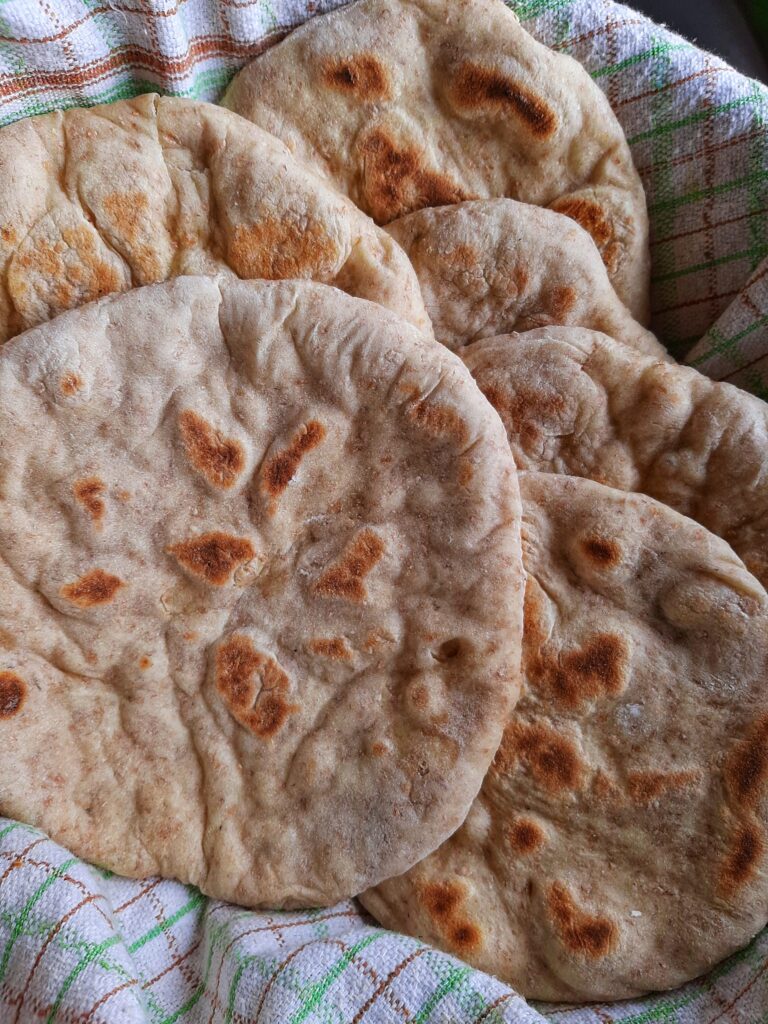

Homemade Pita Bread is one of those simple recipes that instantly transforms everyday meals. Soft, slightly chewy, and lightly toasted with beautiful golden spots, this classic flatbread develops a natural pocket when cooked, making it perfect for stuffing with meats, vegetables, spreads, or fresh salads. Made with a blend of all-purpose and whole wheat flour, the dough comes together easily and cooks quickly on a hot skillet, creating warm, fresh bread in minutes.
While pita bread has its roots in Middle Eastern cuisine, it fits beautifully into Caribbean kitchens where flatbreads, wraps, and stuffed breads are everyday favorites. Fresh homemade pita works wonderfully with grilled meats, roasted vegetables, hummus, or even Trini-style fillings like curry chicken, fried fish, or sautéed channa. The slight nutty flavor from the whole wheat flour gives the bread extra depth while still keeping the texture soft and fluffy.
Another reason this recipe is so loved is its versatility. Homemade pita bread is budget-friendly, freezer-friendly, and ideal for meal prep. Once cooked, the breads can be used throughout the week for quick lunches, wraps, or simple snack platters. The contrast of a soft interior with lightly crisped edges makes every bite satisfying, whether served warm from the skillet or reheated later.
INGREDIENT DETAILS
All-Purpose Flour
Forms the main structure of the pita bread, creating a soft but sturdy dough that cooks into a fluffy, slightly chewy texture.
Whole Wheat Flour
Adds a subtle nutty flavor and extra depth while also giving the bread a slightly heartier texture.
Yeast
Acts as the leavening agent that allows the dough to rise and helps create the airy structure that forms the signature pita pocket.
Warm Water
Activates the yeast and hydrates the flour, helping the dough come together smoothly and develop elasticity.
Vegetable or Olive Oil
Adds softness and moisture to the dough, helping create a tender texture while also preventing dryness.
Salt
Enhances the overall flavor of the bread and balances the natural taste of the flour.
Flour for Dusting
Used during shaping and rolling to prevent the dough from sticking to the work surface or rolling pin.
INGREDIENT ALTERNATIVES
All-Purpose Flour
– Bread flour for a slightly chewier texture
– Gluten-free flour blend designed for yeast breads
Whole Wheat Flour
– More all-purpose flour
– Spelt flour for a slightly nutty flavor
Yeast
– Instant yeast
– Active dry yeast
Warm Water
No substitute needed
Vegetable or Olive Oil
– Coconut oil (mild flavor)
– Butter, melted
Salt
– Sea salt
– Kosher salt
Flour for Dusting
– Cornmeal for light texture
– Whole wheat flour
This homemade pita bread is soft, fluffy, and beautifully puffed with classic pockets. Made with simple pantry ingredients, it cooks quickly on a skillet and is perfect for wraps, dips, and sandwiches.
- 2 1/2 cups all-purpose flour
- 1 cup whole wheat flour
- 2 tbsp yeast
- 1 1/2 cups warm water
- 2 tbsp vegetable or olive oil
- 2 tsp vegetable or olive oil (for kneading and shaping)
- 1 tsp salt
- Extra flour for dusting
- 1 In a large mixing bowl, combine the all-purpose flour, whole wheat flour, yeast, and salt. Mix well with a spoon or your hands until the dry ingredients are evenly combined.
- 2
In a separate cup or bowl, add the vegetable or olive oil to the warm water and stir gently. The water should be lukewarm, not hot, as excessive heat can damage the yeast. Gradually pour the liquid mixture into the flour while mixing, bringing the dough together until it forms a soft mass. The dough should feel soft and slightly tacky but not overly sticky.- 3
Transfer the dough to a lightly floured surface and knead with your hands for about five minutes until it becomes smooth and elastic. Lightly oil your hands and coat the dough with a teaspoon of oil, shaping it into a smooth ball. Dust the bottom of the mixing bowl with a little flour, place the dough inside, cover with a clean towel, and allow it to rest for about 45 minutes or until it has doubled in size.- 4
Once the dough has risen, place a tawah or wide skillet over medium heat and allow it to preheat. Punch down the dough gently to release air, then divide it into six equal pieces. Roll each piece into a ball and cover them with a towel, allowing them to rest for about five minutes.- 5
At this stage you can shape the dough depending on how you want to use the bread.- 6
For pita pockets, roll each dough ball into a smaller, slightly thicker circle about 3–4 mm thick. The thicker dough helps the bread puff as it cooks, creating the classic pocket inside.- 7
For wrap-style flatbreads, roll the dough thinner and wider to create a larger, more flexible bread that works well for wraps and rolls.- 8
Place the rolled dough onto the hot skillet. As it cooks, bubbles will begin to form on the surface. When the bottom develops golden spots, flip the bread and cook the other side until lightly browned and fully cooked.- 9
Remove the cooked bread and place it inside a clean kitchen towel to keep warm and soft. Continue cooking the remaining pieces in the same way. Serve warm as pita pockets for stuffing or as soft wraps for rolling around your favorite fillings.NoteFor the best texture, make sure the skillet is fully preheated before placing the dough inside. A properly heated pan helps the bread puff and develop those classic golden toasted spots.
If the dough feels sticky while shaping, lightly dust with flour rather than adding extra water.
Wrap vs Pocket Tip
You can shape this dough depending on how you plan to use the bread. For pita pockets, roll the dough into smaller circles that are slightly thicker so the bread puffs and forms a natural pocket during cooking.For wraps, roll the dough thinner and wider. The thinner dough stays soft and flexible, making it easier to fold and roll around fillings like grilled chicken, vegetables, hummus, or salad.
Storage Tip
Store cooled breads in an airtight container or sealed bag for up to three days at room temperature. To keep them longer, freeze for up to one month.
Reheating Tip
Warm the bread briefly in a skillet or toaster oven to restore softness. If reheating from frozen, allow the bread to thaw first, then heat gently.
Flavor Variations
For extra flavor, brush the finished breads lightly with olive oil and sprinkle with garlic powder, dried herbs, or a pinch of sea salt while still warm.homemade pita bread, pita bread recipe, skillet pita bread, soft pita bread, flatbread recipe, easy homemade bread, pocket bread recipe, Middle Eastern flatbread, homemade wraps, simple yeast bread - 2