CALLALOO
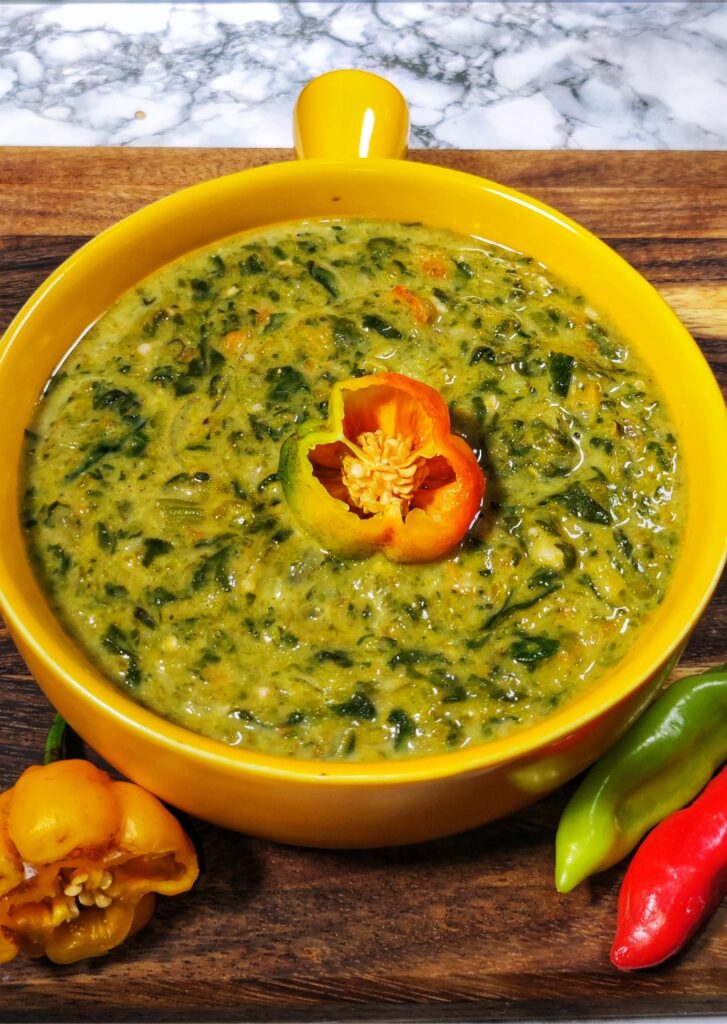
Nothing says Trini Sunday lunch to me more than a steaming pot of Callaloo. Let me tell you, I cannot begin to describe the sweet symphony of flavors that comes from young chopped dasheen bush leaves added to a pot of creamy white coconut milk. The bright orange of the pumpkin, either picked from our yard or bought at the market, the fresh young bright green slices of okra, and chunks of orange carrots, along with the freshest aromatics—pimento, garlic, and onion—are all lovingly simmered together. And not to mention the finale: if you're a chunky Callaloo texture person, the swizzling at the end further breaks down the ingredients to bring it to the perfect texture. Yummy, just like Granny used to make.
I lost myself a little just putting together this intro, but now that our pot of Callaloo is fully cooked and ready to be eaten alongside other Sunday lunch staples like stewed chicken, fried rice, red beans, macaroni pie, potato salad, and fresh salad, let us dive into the magic of this irresistible goodness.
Callaloo, a popular dish in Trinidad and Tobago, originates from West Africa. The name "calalloo" comes from a West African word for a leafy green vegetable. African slaves brought their culinary traditions to the Caribbean during the transatlantic slave trade, leading to the creation of dishes like callaloo. In Trinidad and Tobago, callaloo is a common dish made with leafy greens, coconut milk, okra, and various seasonings, reflecting the fusion of African and Caribbean culinary influences.
INGREDIENT DETAILS
- Dasheen Bush Leaves:
- Also known as taro leaves, dasheen bush leaves are dark green and edible. They are rich in vitamins A and C, calcium, and iron. When cooked, they have a tender texture and a slightly earthy flavor.
- Coconut Milk:
- Made from the grated flesh of mature coconuts, coconut milk adds creaminess and a subtle sweetness to dishes. It’s a key ingredient in many Caribbean recipes and provides healthy fats.
- Okra:
- A green, pod-like vegetable, okra is known for its unique texture and flavor. It’s often used in stews and soups, contributing a slight thickness due to its natural mucilage. Okra is low in calories and high in fiber and vitamins.
- Pumpkin:
- Pumpkin adds a sweet, earthy flavor and vibrant color to the dish. It is rich in antioxidants, vitamins (especially vitamin A), and minerals. When cooked, pumpkin becomes soft and creamy.
- Carrot:
- Carrots are sweet, crunchy vegetables that add color and nutrients. They are high in beta-carotene, which the body converts to vitamin A, and they contribute a slight sweetness to the dish.
- Onion:
- Onions provide a strong aromatic base for many dishes. They add sweetness and depth of flavor when cooked. Onions are a good source of vitamins C and B6, as well as antioxidants.
- Garlic:
- Known for its strong flavor and aroma, garlic also offers numerous health benefits, including anti-inflammatory and antioxidant properties. It enhances the overall taste of the Callaloo.
- Pimentos:
- The Trinidad Pimento is also known as Seasoning pepper. It is the most popular cooking pepper on the Islands of Trinidad and Tobago. It has the flavor of extremely hot peppers but almost no heat.
- Hot Pepper:
- Hot peppers add heat and flavor to the dish. The type of pepper can vary (like Scotch bonnet or habanero), and they are rich in vitamins A and C. Adjust the amount to suit your spice preference.
- Salt and Black Pepper:
- These are essential seasonings that enhance the flavors of all the other ingredients. Salt brings out the natural flavors, while black pepper adds a mild heat.
These ingredients come together to create a flavorful and nutritious dish that is a staple in Trinbagonian cuisine.
Trini Callaloo: A flavorful Caribbean delicacy featuring vibrant dasheen bush leaves, and a medley of vegetables simmered in rich coconut milK finished with a hint of heat from a hot pepper, this dish is a true taste of Trinidad and Tobago. Perfectly balanced and bursting with island flavors, Trini Callaloo is a must-try for any food enthusiast looking to experience the essence of Caribbean cuisine.
- 1 bundle Dasheen Bush leaves (with ½ bundle of stems)
- 2 - cups Coconut Milk
- 6 6-8 - small to medium-sized Okra, sliced
- - ½ lb Pumpkin, cubed
- 1 - small Carrot, thinly sliced
- 1 - medium Onion, roughly chopped
- 4 4-5 - cloves Garlic, crushed
- 5 - medium-sized Pimentos, roughly chopped
- - Hot Pepper (to taste)
- - Salt and Black Pepper (to taste)
- 1 1. **Combine Ingredients**: In a large saucepan or soup pot, add the coconut milk along with the chopped Dasheen Bush leaves.
- 2
2. **Add Vegetables**: Add the cubed pumpkin, sliced carrots, okra, onion, garlic, pimentos, and hot pepper to the saucepan.- 3
3. **Cook**: Pour in one cup of water and cover with a lid. Place the saucepan on medium heat and cook for approximately 20-25 minutes. Note: You can add the hot pepper at the halfway mark to control the spice level.- 4
4. **Blend**: Once all the ingredients have softened, lower the heat, remove the hot pepper, and use a swizzle stick, food processor, or blender to gradually puree the mixture to your desired texture.- 5
5. **Season and Serve**: Once the Callaloo has reached the desired consistency, add salt and black pepper to taste. Mix well and serve hot with your choice of sides.Note1. Preparation**:
- Make sure to wash the Dasheen Bush leaves thoroughly to remove any dirt or grit. Chopping them into smaller pieces helps them cook down more evenly.
2. **Cooking Time**:
- The cooking time can vary depending on the freshness and size of the vegetables. Always check for tenderness, especially for the pumpkin and carrots, as they should be soft enough to blend.
3. **Texture Preferences**:
- If you prefer a chunkier texture, blend only half of the mixture and leave the rest whole. You can also adjust the blending time to achieve your desired consistency.
4. **Spice Control**:
- If you like it spicy, you can leave the hot pepper in for the entire cooking time. For a milder flavor, add it later or use less.
5. **Flavor Enhancements**:
- Feel free to add other seasonings or herbs, such as thyme or scallions, to enhance the flavor profile.
### Storage Notes
1. **Refrigeration**:
- Store any leftover Callaloo in an airtight container in the refrigerator. It will typically last for 3-5 days.
2. **Freezing**:
- Callaloo can be frozen for longer storage. Allow it to cool completely, then transfer it to a freezer-safe container or bag. It can last up to 3 months in the freezer. To reheat, thaw in the refrigerator overnight and warm on the stovetop or in the microwave.
3. **Reheating**:
- When reheating, add a splash of water or coconut milk to prevent it from drying out. Heat gently over medium-low heat until warmed through.
4. **Serving**:
- Callaloo is best enjoyed fresh, but it's still delicious when reheated. It pairs well with a variety of proteins and starches, making it a versatile dish.
These notes should help you with preparation, cooking, and storing your Callaloo.
callaloo, trini cooking, trinbagonian food, caribbean cooking, yummy - 2