

There’s something truly special about baking your own bread — the irresistible smell, the satisfying texture, and the comfort of knowing exactly what’s in your loaf. This Honey Oat Bread is a perfect example of homemade magic. It’s hearty, wholesome, and irresistibly delicious, making it a wonderful addition to any meal or snack.
Packed with nourishing ingredients like rolled oats, whole wheat flour, and a touch of honey, this bread offers a rich, complex flavor with a satisfying chew. The rolled oats add a nutty, toasted flavor, and a hearty texture, while the whole wheat flour provides an earthy depth and a bit of extra fiber. The coconut oil lends a subtle richness and a hint of tropical aroma, balancing beautifully with the sweetness of the honey.
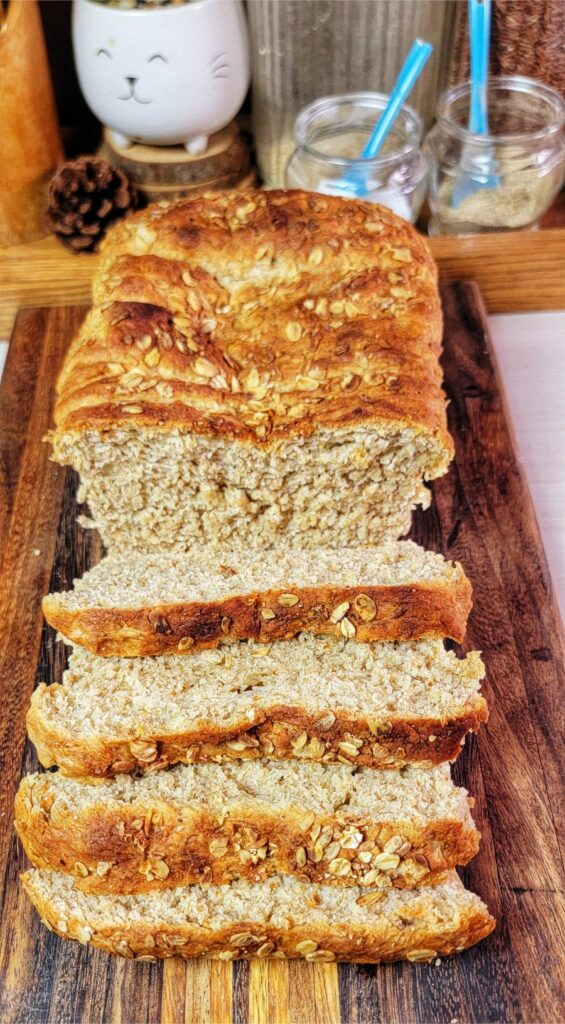
Baked to golden perfection with a slightly crisp crust and a soft, tender crumb inside, this bread is perfect for breakfast, sandwiches, or simply enjoying warm with a pat of butter. It’s a delicious, nourishing treat that’s as satisfying to make as it is to eat.
INGREDIENTS DETAILS
All-Purpose Flour:
Provides the structure and a light, chewy crumb.
Rolled Oats:
Adds hearty texture, nutty flavor, and a rustic look.
Whole Wheat Flour:
Contributes a nutty, earthy flavor, and extra fiber for nutrition.
Milk:
Keeps the bread tender and moist, helping it rise beautifully.
Instant Yeast:
Leavens the dough, making it light and airy.
Coconut Oil:
Adds subtle richness, moisture, and softness.
Honey:
Naturally sweetens, enhances browning, and adds flavor.
Salt:
Balances sweetness and strengthens gluten for a better rise.
Butter/Margarine:
Brushed on top for a glossy finish and extra richness.
INGREDIENT ALTERNATIVES
All-Purpose Flour:
- Whole Wheat Flour or Whole Grain Flour: For a more rustic, hearty loaf.
- Gluten-Free Flour Blends: For gluten-free baking, ensure the blend is suitable for bread.
Rolled Oats:
- Instant Oats : Adding a chewy texture and the same nutty flavor.
- Oat Flour: Finely ground oats for a smoother texture or omit if oats are unavailable.
Whole Wheat Flour:
- Spelt Flour or Rye Flour: Offers a different flavor profile and nutrition.
- Additional All-Purpose Flour: For a lighter loaf, it reduces whole grain content.
Milk:
- Plant-Based Milk (Almond, Soy, Oat, Coconut): For dairy-free options.
- Water with a bit of oil: For a dairy-free, simpler alternative, though it may affect flavor and moisture.
Instant Yeast:
- Active Dry Yeast: Use 25% more (about 2¾ teaspoons); proof it in warm water with a pinch of sugar before adding.
- Fresh Yeast: Use about 0.6 oz (17g), crumbled and dissolved in warm milk.
Coconut Oil:
- Olive Oil or Vegetable Oil: For a neutral flavor and similar moisture.
- Butter or Margarine: Adds richness, especially if dairy is acceptable.
Honey:
- Maple Syrup or Agave Nectar: Natural sweeteners with similar consistency and sweetness.
- Brown Sugar or Cane Syrup: For a richer, caramel-like flavor.
Salt:
- Sea Salt or Himalayan Salt: For a different mineral profile and flavor.
- Less Salt: Adjust to taste, especially if using flavored salts.
Butter or Margarine (for finishing):
- Olive Oil or Additional Melted Coconut Oil: For a healthier, dairy-free finish.
- Honey or Glaze: For added sweetness and shine if you prefer a sweeter crust.
HONEY OAT BREAD
Description
Honey Oat Bread is ideal for breakfast, toast, or sandwiches. This bread is versatile and full of flavor. Incredibly tender, soft crumb and a beautifully toasted, slightly crisp crust, this bread offers a perfect balance of textures.
Ingredients
Instructions
-
Warm the milk slightly above room temperature, either on the stove or in the microwave, and pour it into a medium to large mixing bowl. Whisk in the honey and yeast, and let the mixture sit for 7 to 8 minutes until the yeast blooms and becomes frothy. Stir in the coconut oil, then add the all-purpose flour, whole wheat flour, rolled oats, and salt. Mix until the dough comes together; it will be sticky.
-
Lightly flour your work surface and transfer the dough onto it. Knead for 2 to 3 minutes, dusting with more flour as needed to prevent sticking. Form the dough into a ball and place it in a greased bowl. Cover the bowl with a towel and let the dough rise in a warm place for 1 hour.
-
After the first rise, punch down the dough to release the air. Place it onto a floured surface, flatten it slightly, and roll it into a log shape. Transfer the dough to a greased and floured 9×5-inch loaf pan. If desired, gently score the top with a sharp knife. Let the dough rise again for 30 minutes.
-
About 10 minutes before the second rise is complete, preheat your oven to 350°F. Brush the top of the dough with honey; if the honey is too thick, stir in 1 tablespoon of water to thin it. Sprinkle more rolled oats on top. Place the loaf in the center of the oven and bake for 30 minutes.
-
After 30 minutes, remove the loaf from the oven, brush with butter or margarine, and return to the oven under the broiler for an additional 10 to 15 minutes, or until the top is a rich, deep golden brown. Keep a close eye on it during broiling to avoid burning.
-
Remove the bread from the oven and transfer it to a wire rack. Let it cool for 10 to 15 minutes before slicing and serving.
Note
- Yeast Activation: Make sure your milk is warm (not hot, about 110°F/45°C) to activate the yeast without killing it.
- Sticky Dough: The dough will be sticky; don't worry, just knead gently and use floured surfaces to handle it.
- First Rise: Place the dough in a warm, draft-free spot for optimal rising. You can also proof in a slightly warm oven (turn it on briefly, then turn off).
- Shaping: Flatten the dough gently to remove air pockets before shaping into a loaf.
- Second Rise: Cover the shaped loaf loosely with plastic wrap or a towel to prevent it from drying out.
- Crust: For a darker crust, broil for a few extra minutes but keep a close eye to prevent burning.
- Cooling: Let the bread cool before slicing to allow the crumb to set properly.
- Variations: Add nuts, seeds, or dried fruits for extra flavor and texture.
- Storage: Store in an airtight container at room temperature for 2-3 days, or freeze for longer storage.
