

This savory dish featuring salted pigtails and black-eyed peas is not just a flavorful meal; it’s steeped in rich tradition. Eating black-eyed peas on Old Years Day into the New Year is a long-standing custom believed to bring prosperity and good luck for the year ahead. This practice dates back to ancient times, originating in the Southern United States, where enslaved Africans embraced the pea as a symbol of resilience and hope.
The tradition spread over the years, finding its way to various cultures, including Trinidad and Tobago, where it has become a beloved staple during celebrations. In this recipe, the creamy black-eyed peas are deliciously blended with aromatic vegetables and spices, creating a comforting dish that we Trinbagonians refer to as a cook-up. This dish not only delights the palate but also honors the spirit of abundance and good fortune as we welcome each new year.
Ingredient Details
- Salted Pigtails:
- Description: Salted pigtails are the cured tails of pigs, often used in Caribbean cooking for their rich flavor.
- Flavor Profile: They provide a savory, umami-rich taste with a slightly salty kick.
- Role in the Dish: They serve as the primary protein, imparting depth and heartiness to the dish.
- Black Eyed Peas:
- Description: These small, creamy beans are a staple in Southern cuisine and are often used in traditional New Year’s dishes.
- Flavor Profile: They have a mild, earthy flavor that absorbs surrounding spices well.
- Role in the Dish: They add creaminess and texture, contributing to the overall heartiness of the meal.
- Rice:
- Description: A versatile grain, rice is a staple in many cultures and serves as the base for countless dishes.
- Flavor Profile: It has a neutral taste that allows it to absorb the flavors of the ingredients around it.
- Role in the Dish: The rice acts as a filling component, soaking up the flavorful broth and complementing the other ingredients.
- Carrot:
- Description: A root vegetable known for its natural sweetness and vibrant color.
- Flavor Profile: Sweet and slightly earthy, carrots add a hint of brightness to the dish.
- Role in the Dish: They provide texture and visual appeal, balancing the savory flavors with their sweetness.
- Pumpkin:
- Description: A versatile squash that can be used in both sweet and savory dishes.
- Flavor Profile: Sweet and slightly nutty, pumpkin adds a creamy texture when cooked.
- Role in the Dish: It enhances the dish’s sweetness and contributes to its overall heartiness.
- Onion:
- Description: A fundamental aromatic vegetable used in cooking for its flavor and aroma.
- Flavor Profile: Sweet when cooked, with a hint of sharpness that mellows during sautéing.
- Role in the Dish: Onions form the flavor base, enhancing the overall depth of the dish.
- Pimento:
- Description: Also known as allspice or Jamaica pepper, pimento is a key spice in Caribbean cooking.
- Flavor Profile: It has a warm, sweet, and slightly spicy flavor reminiscent of cloves, cinnamon, and nutmeg.
- Role in the Dish: Pimento adds complexity and warmth, enhancing the dish’s aromatic profile.
- Shadon Beni (Culantro):
- Description: A herb commonly used in Caribbean cuisine, similar to cilantro but with a stronger flavor.
- Flavor Profile: Fresh, citrusy, and slightly peppery, it adds brightness to dishes.
- Role in the Dish: It brings freshness and a distinctive flavor that elevates the overall taste.
- Chives:
- Description: A mild herb with a delicate onion flavor, often used as a garnish.
- Flavor Profile: Subtle and slightly sweet, chives add a fresh note to dishes.
- Role in the Dish: They enhance the dish with a fresh aroma and a hint of color.
- Celery:
- Description: A crunchy vegetable with a mild, slightly peppery flavor.
- Flavor Profile: Earthy and refreshing, it adds both flavor and texture.
- Role in the Dish: Celery contributes to the aromatic base, enhancing the dish’s overall complexity.
- Garlic:
- Description: A potent aromatic bulb used for its strong flavor and health benefits.
- Flavor Profile: Pungent and slightly sweet when cooked, garlic offers depth and richness.
- Role in the Dish: It enhances the flavor profile significantly, providing warmth and richness.
- Olive Oil:
- Description: A healthy fat used for cooking and dressing.
- Flavor Profile: Fruity and slightly peppery, olive oil adds richness to dishes.
- Role in the Dish: It’s used for sautéing the aromatics, helping to release their flavors.
- Fine Thyme:
- Description: An herb with small leaves and a strong aromatic flavor.
- Flavor Profile: Earthy and slightly minty, thyme adds depth and complexity.
- Role in the Dish: It enhances the dish’s aromatic quality, contributing to a well-rounded flavor.
- Water:
- Description: The base for cooking, essential for hydration and flavor extraction.
- Flavor Profile: Neutral, it carries the flavors of the other ingredients.
- Role in the Dish: Used to create the cooking liquid, it helps cook the rice and peas thoroughly.
- Black Pepper:
- Description: A common spice known for its heat and flavor.
- Flavor Profile: Spicy and pungent, it adds warmth and complexity.
- Role in the Dish: It seasons the dish, enhancing the overall flavor profile.
- Salt and Hot Pepper:
- Description: Essential seasonings used to enhance flavors.
- Flavor Profile: Salt amplifies taste, while hot pepper adds heat and spice.
- Role in the Dish: They balance and elevate the flavors, allowing for customization based on personal preference.
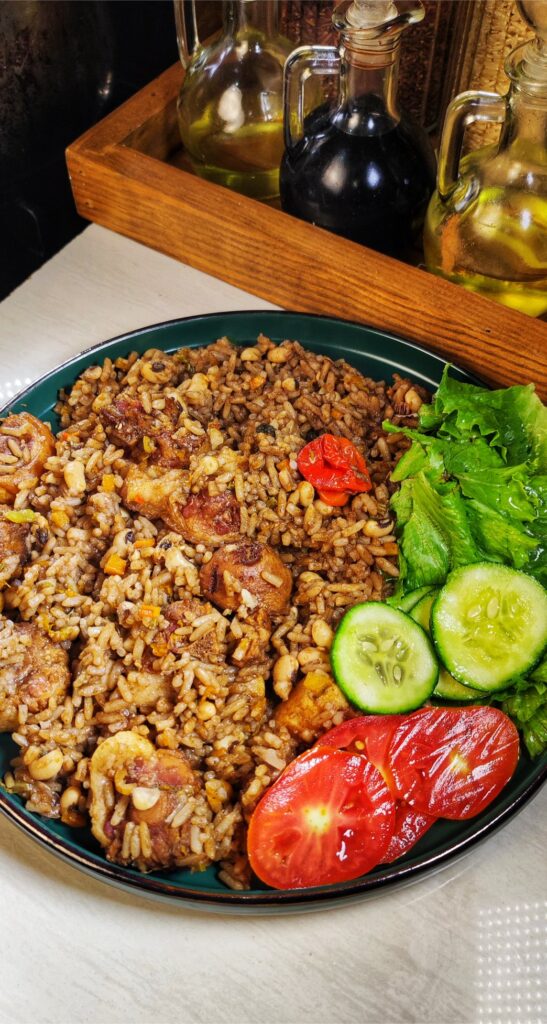
BLACK EYED PEAS COOK-UP
Description
This Trinbagonian dish features savory salted pigtails that infuse rich, meaty flavors, complemented by creamy black-eyed peas and fluffy rice that soak up the delicious flavors. Peppered with pieces of cubed carrots and pumpkin that add a touch of natural sweetness and a pop of color, while aromatic onions, garlic, and pimento enhance the overall flavor profile with warmth and a hint of spice.Fresh herbs like shadon beni and chives provide a refreshing brightness, and a sprinkle of thyme adds an herbal note. Seasoned with black pepper and salt and tied together lovingly by creamy, rich coconut milk. This dish is a delightful blend of savory, sweet, and aromatic elements, making it a satisfying meal perfect for sharing.
Ingredients
Instructions
-
If you are using dried peas, rinse and soak them for 2-3 hours (or overnight for a shorter cooking time). Once the peas have soaked for the appropriate amount of time, rinse them again and place them in a pot of water, covering the peas. Cook on medium-high heat for an hour or so until the beans are soft. Drain and set aside.
-
Cut up your pigtails into small pieces, rinse, then place them in a saucepan and cover with water. Bring to a boil and allow to cook for 12-15 minutes to remove salt and some of the fat buildup. Rinse at the 15-minute mark and repeat once more before removing from water and setting aside.
-
Place a large saucepan or Dutch pot on high heat and add the olive oil. Allow your oil to heat up gradually before tossing in 3/4 of your onions, pimento, garlic, celery, chives, shadon beni, and all of the pigtails. Sauté for 2-3 minutes.
-
Toss in the rice, peas, carrots, and pumpkin, and mix well before stirring in your coconut milk and browning. Season with salt and black pepper, and top with thyme and hot pepper.
-
Bring to a simmer, then lower the heat to medium and cover with a lid. Allow the cook-up to cook for approximately 20-25 minutes, checking at the 20-minute mark for the level of doneness of the rice.
-
Once the rice has fully cooked and all of the liquid has been absorbed, stir in the remaining seasonings (onions, pimento, garlic, shadon beni, celery & chives) . If there is still a bit of liquid remaining, lower the heat again and let the liquid cook off with the pot uncovered. Adjust the salt in the cook-up if necessary before turning off the heat. Let your cook-up sit for 7-10 minutes before serving with some fresh greens, cucumbers, tomatoes, or sides of your choice.
Note
- Soaking Black Eyed Peas: If using dried black-eyed peas, soaking them overnight or for at least 2-3 hours will significantly reduce cooking time and improve texture. Remember to rinse them before cooking.
- Salted Pigtails: Depending on the saltiness of the pigtails, you may want to taste them after the initial boiling step. If they are too salty, you can repeat the rinsing process or soak them in water for a bit longer.
- Adjusting Spice Levels: The amount of hot pepper can be adjusted to suit your heat preference. Start with a small amount, and increase gradually if you enjoy more heat.
- Coconut Milk: If you choose to add coconut milk, ensure it’s well-mixed before stirring it into the dish. This will help distribute the flavor evenly.
- Checking Rice: Cooking times for rice can vary based on the type used. Check for doneness at the 20-minute mark and add a bit more water if necessary. The rice should be tender and all liquid absorbed.
- Stirring the Dish: Stir gently to avoid breaking up the rice and peas too much. You want to retain some texture while ensuring all ingredients are well combined.
- Resting Time: Letting the dish sit for 7-10 minutes after cooking allows the flavors to meld together and makes serving easier.
- Serving Suggestions: This dish pairs well with fresh greens, cucumbers, and tomatoes, which add a refreshing contrast to the rich and hearty flavors of the cook-up.
- Storage: Leftovers can be stored in an airtight container in the refrigerator for up to three days. Reheat gently on the stove or in the microwave, adding a splash of water if needed to loosen the consistency.
