

The name “Dosti,” meaning friendship, reflects the communal spirit of sharing this bread among loved ones. With its golden-brown crust and tender interior, Dosti Roti is a delightful addition to any meal, bringing warmth and comfort to the dining table. Brought to the shores of Trinidad and Tobago by East Indian indentured laborers, this is undoubtedly one of my favorite types of roti to prepare, as it is simple and easy to perfect. As always, I am delighted to share my Dosti Roti recipe with you all, and I hope you enjoy it.
INGREDIENT DETAILS
1. All-Purpose Flour (4 cups / 500 g)
- Purpose: The main structure of the roti. All-purpose flour provides the necessary gluten to give the bread its chewy texture.
- Notes: Sifting the flour helps aerate it and removes any lumps, resulting in a lighter dough.
2. Baking Powder (4 tsp)
- Purpose: A leavening agent that helps the dough rise, creating a lighter and fluffier texture in the finished roti.
- Notes: Ensure that your baking powder is fresh for maximum effectiveness.
3. Salt (1/2 tsp)
- Purpose: Enhances the flavor of the roti and balances the sweetness of other ingredients.
- Notes: Salt can also strengthen the dough by tightening the gluten structure, contributing to a better texture.
4. Water (1 2/3 cups / 400 ml)
- Purpose: Hydrates the flour and activates the gluten, creating a workable dough.
- Notes: Water temperature can affect the dough; room temperature is usually best for mixing.
5. Vegetable Oil (1/2 cup / 120 ml)
- Purpose: Adds moisture and richness to the dough, making it tender. It also helps in cooking the roti, preventing sticking.
- Notes: You can substitute with other oils like canola or sunflower oil if desired.
6. Extra Vegetable Oil (for brushing)
- Purpose: Used to brush on the roti before cooking to enhance flavor and achieve a golden-brown crust.
- Notes: Brushing oil also helps in layering the dough when stacking, making it easier to roll out.
Additional Notes
- Resting Periods: Allowing the dough to rest is crucial as it relaxes the gluten, making it easier to roll out and ensuring a softer texture.
- Cooking Method: The use of a tawah or skillet is traditional and helps achieve the characteristic texture and flavor of Dosti Roti.
INGREDIENTS & ALTERNATIVES
1. All-Purpose Flour (4 cups / 500 g)
- Alternative:
- Whole Wheat Flour: For a healthier option, use whole wheat flour, though it may result in a denser roti.
- Gluten-Free All-Purpose Flour: If you need a gluten-free option, use a gluten-free all-purpose blend, but be sure to check that it includes xanthan gum for binding.
2. Baking Powder (4 tsp)
- Alternative:
- Baking Soda (1 tsp) + Cream of Tartar (2 tsp): Use this combination instead of baking powder. This mixture will provide the necessary leavening effect.
- Self-Rising Flour: If you have self-rising flour, you can use it instead of all-purpose flour and omit the baking powder and salt.
3. Salt (1/2 tsp)
- Alternative:
- Sea Salt or Kosher Salt: These can be used in the same quantity; adjust to taste.
- Herb Seasoning: If you want a different flavor profile, consider using an herb seasoning blend, but adjust the quantity since these can vary in salt content.
4. Water (1 2/3 cups / 400 ml)
- Alternative:
- Milk: For a richer taste, use milk instead of water. This will also create a softer texture.
- Vegetable Broth: For added flavor, use vegetable broth in place of water.
5. Vegetable Oil (1/2 cup / 120 ml)
- Alternative:
- Coconut Oil: Offers a distinct flavor and can contribute to a softer dough.
- Olive Oil: A healthier fat option that can add a unique taste to the roti.
6. Extra Vegetable Oil (for brushing)
- Alternative:
- Melted Butter: For a richer flavor, brush the roti with melted butter instead of oil.
- Ghee: A traditional option that adds a wonderful taste and aroma.
Additional Tips
- Adjusting Quantities: When substituting ingredients, you may need to adjust quantities slightly based on the moisture content and properties of the alternatives.
- Experimentation: Feel free to experiment with different flours and fats to find the flavor and texture that you enjoy most.
These alternatives should help you modify the recipe based on dietary preferences or ingredient availability.
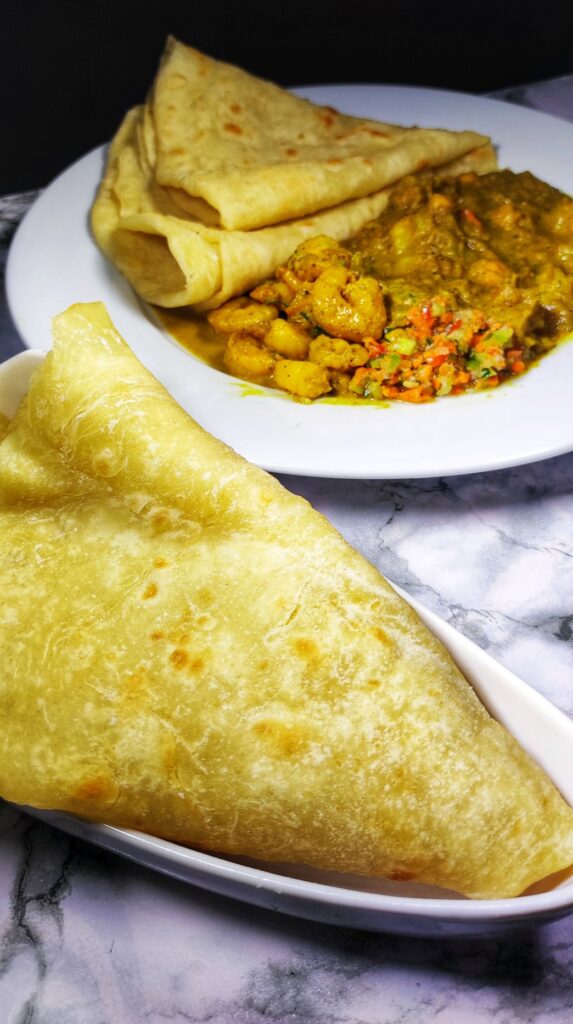
DOSTI ROTI
Description
Dosti Roti is a delicious Indian flatbread known for its unique layered texture and rich flavor. Traditionally made by stacking and rolling out two dough balls, it creates a soft, flaky roti that is perfect for scooping up curries or enjoying with various fillings.
Ingredients
Instructions
-
In a large mixing bowl, combine the flour, baking powder, and salt. Mix well to ensure even distribution.
-
Create a well in the center of the dry ingredients. Gradually add the water into the well, mixing with your hands or a spoon until the dough comes together. The dough should be slightly sticky.
-
Transfer the dough to a lightly floured surface. Knead for about 2 minutes until smooth. Shape it into a ball and place it in a bowl. Cover with a kitchen towel and let it rest for approximately 45 minutes.
-
After resting, divide the dough into 8 equal balls (or "loyas"). Dust each ball with flour, cover them with a towel, and let them rest for another 15 to 20 minutes.
-
Preheat your tawah or large skillet over medium heat. Take two dough balls (loyas). Roll out the first ball gradually, then brush the top with some vegetable oil. Roll out the second ball and place it on top of the first oiled ball.
-
Roll the two stacked dough balls out together until they are flattened as thinly as possible.
-
**Tip**: While rolling, periodically flip the dough and adjust the edges to ensure they are even in thickness.
-
Lightly grease the tawah or skillet with oil. Place the rolled dough onto the hot surface. Cook one side for about 10 seconds, then flip it over. Brush oil on the cooked side and flip it back. Continue cooking both sides until golden spots appear.
-
Place the cooked roti in a large bowl lined with baking paper, separating each layer with baking paper, and cover with a towel to keep warm. Repeat the process with the remaining dough balls.
-
Serve hot
Note
Cook's Notes
- Flour Type: Use all-purpose flour for a versatile texture, but you can experiment with whole wheat flour for a healthier option.
- Water Temperature: Room temperature water is best for mixing; avoid using cold water, as it can affect the dough's consistency.
- Dough Consistency: The dough should be slightly sticky but manageable. If it’s too sticky, sprinkle a little more flour while kneading.
- Resting Time: Allowing the dough to rest is crucial for gluten development, which makes the roti easier to roll out and gives it a better texture.
- Cooking Temperature: Ensure your tawah or skillet is preheated properly; it should be hot enough to cook the roti quickly without burning.
- Storage: If you have leftover roti, store it in an airtight container lined with parchment paper to prevent sticking. Reheat on a skillet for best results.
- Serving Suggestions: Dosti Roti pairs well with various fillings, such as curried vegetables such as potatoes, curried meats and various talkaris.
- Experiment: Feel free to add herbs or spices to the dough for additional flavor, or try using ghee instead of oil for brushing.
These notes can help enhance the cooking experience and ensure delicious results! Let me know if you need anything else.
