

Quinoa and pelau are not typically two words that go together but sometimes in the name of necessity you have to try new things and I can tell you this is a new thing that works so very very well.
Pelau is another Trinibagonian food that is both respected and revered in many a household. Typically made by stewing some well seasoned chicken or beef and the adding white rice, green or dried pigeon peas, coconut milk, carrots, pumpkin, ginger and other delicious aromatics and cooked down into a very delicious one pot meal.
I always tell the story of why the need arose for me to create this for a customer of that I made weekly meal plans for asked for her meals to consist of more high fiber items and since she wasn’t having white rice, psta, potatoes and slew of other mains I had to get creative and boy am I glad that I did. This wonderful grain is such a versatile rice replacement that it gives you the ability to switch you cooking up and never even miss a lot of the reg foods you’re accustomed to and go ahead, add your sweet potato salad, coleslaw, plantains and fresh salad right alongside this you wont regret it i promise you.
Cooking with Quinoa
Benefits of Quinoa:
- Nutrient-Rich: Quinoa is a highly nutritious grain-like seed that is packed with essential nutrients such as protein, fiber, vitamins, and minerals.
- Complete Protein Source: Quinoa is one of the few plant-based foods that contain all nine essential amino acids, making it an excellent protein source for vegetarians and vegans.
- Gluten-Free: Quinoa is naturally gluten-free, making it a great alternative for those with gluten sensitivities or celiac disease.
- High in Fiber: Quinoa is a good source of dietary fiber, which can help promote digestive health and keep you feeling full and satisfied.
- Rich in Antioxidants: Quinoa contains antioxidants that help protect the body against oxidative stress and inflammation.
Using Quinoa as an Alternative to White Rice:
- Texture and Flavor: Quinoa has a slightly nutty flavor and a light, fluffy texture when cooked, making it a versatile ingredient in various dishes.
- Cooking Method: Quinoa can be cooked similarly to white rice by boiling it in water or broth until it becomes tender. It can be used as a base for pilafs, salads, stir-fries, or served as a side dish.
- Health Benefits: Substituting white rice with quinoa can increase the nutritional value of your meal, providing more protein, fiber, and essential nutrients.
- Versatility: Quinoa can be used in a wide range of dishes, from breakfast porridges and salads to main courses and desserts.
Origin of Quinoa:
Quinoa is native to the Andean region of South America, particularly Peru, Bolivia, Ecuador, and Colombia. It has been cultivated for thousands of years by indigenous peoples in the Andes and was considered a sacred crop by the ancient Incas.
Today, quinoa is grown in various countries around the world due to its increasing popularity and nutritional benefits. The plant thrives in diverse climates and soil conditions, making it a versatile and sustainable crop.
Certainly! Here’s a brief description of each ingredient used in the Beef and Quinoa recipe:
Ingredient Details
- Beef Cubes (1 1/2 lb): Tender cuts like chuck or sirloin are best for stewing, providing a rich flavor and texture when braised with the other ingredients.
- Green Seasoning (2 tbsp): A blend of herbs and spices (often including ingredients like cilantro, parsley, garlic, and green onions) used to marinate the beef, adding depth and freshness to the dish.
- Quinoa (2 cups, rinsed): A nutritious grain that is gluten-free and high in protein. Rinsing removes its natural coating (saponin) to reduce bitterness.
- Water (3 cups total): Used for cooking quinoa and to adjust the consistency of the dish.
- Green Pigeon Peas (2 cups): Nutty and slightly sweet legumes that add texture and protein. They can be fresh, frozen, or canned.
- Coconut Milk (2 cups total): Provides creaminess and a subtle sweetness, balancing the flavors. Use full-fat coconut milk for richness.
- Brown Sugar (1/2 cup): Adds sweetness and helps caramelize the beef for a deeper flavor profile. It can enhance the overall taste of the dish.
- Carrot (1 medium, diced): Adds sweetness, color, and nutrition. Diced for even cooking and to blend well with the other ingredients.
- Celery (2 small stalks, chopped): Contributes a mild, savory flavor and crunch. It’s a standard ingredient in many savory dishes for its aromatic qualities.
- Onion (1 small, chopped): Adds sweetness and depth of flavor when sautéed. It forms the base of many dishes.
- Garlic (2 cloves, minced): Provides a robust and aromatic flavor that enhances the overall dish.
- Ginger (1 tbsp, grated): Adds warmth and a slight spiciness, complementing the other flavors in the dish.
- Pimento (3 small, chopped): Adds a sweet and tangy flavor.
- Hot Pepper: Adds heat to the dish. Adjust to taste based on your spice preference.
- Salt & Pepper (to taste): Essential for enhancing the flavors of all ingredients. Adjust according to personal preference.
Ingredient Alternatives
- Beef Cubes (1 1/2 lb):
- Alternatives:
- Chicken (cubed)
- Pork (cubed)
- Tofu (for a vegetarian option)
- omitting altogether
- Green Seasoning (2 tbsp):
- Alternatives:
- Fresh herbs like parsley, cilantro, and basil mixed with garlic and onion powder
- Store-bought marinade or seasoning blend
- Quinoa (2 cups, rinsed):
- Alternatives:
- Brown rice
- Bulgur wheat
- Couscous (for a quicker cooking option)
- Water (3 cups total):
- Alternatives:
- Vegetable broth or chicken broth (for added flavor)
- Coconut water (for a slight sweetness)
- Green Pigeon Peas (2 cups):
- Alternatives:
- Chickpeas (canned or cooked)
- Black beans
- Lentils (adjust cooking time as needed)
- Coconut Milk (2 cups total):
- Alternatives:
- Almond milk (for a lighter option, but less creamy)
- Regular cow’s milk or cream (for a non-dairy alternative, adjust for creaminess)
- Cashew cream (for a rich, dairy-free option)
- Brown Sugar (1/2 cup):
- Alternatives:
- Honey or maple syrup (for a natural sweetener)
- Coconut sugar
- Agave syrup
- Carrot (1 medium, diced):
- Alternatives:
- Sweet potato (diced)
- Bell pepper (diced)
- Zucchini (diced)
- Celery (2 small stalks, chopped):
- Alternatives:
- Fennel (chopped)
- Leeks (sliced)
- Green beans (chopped)
- Onion (1 small, chopped):
- Alternatives:
- Shallots (finely chopped)
- Green onions or scallions (chopped)
- Onion powder (if you prefer not to use fresh onions)
- Garlic (2 cloves, minced):
- Alternatives:
- Garlic powder (1/8 tsp per clove)
- Shallots (finely chopped)
- Garlic-infused oil (for a milder flavor)
- Ginger (1 tbsp, grated):
- Alternatives:
- Ground ginger (1/4 tsp)
- Galangal (if available)
- Fresh turmeric (grated, for a different flavor profile)
- Pimento (3 small, chopped):
- Alternatives:
- Bell pepper (any color, diced)
- Roasted red peppers (chopped)
- Cherry tomatoes (halved)
- Hot Pepper:
- Alternatives:
- Red pepper flakes (for a milder heat)
- Jalapeño (fresh, chopped, for a different flavor)
- Sweet bell pepper (for no heat)
- Salt & Pepper (to taste):
- Alternatives:
- Soy sauce or tamari (for saltiness and umami flavor)
- Seasoned salt (to add extra flavor)
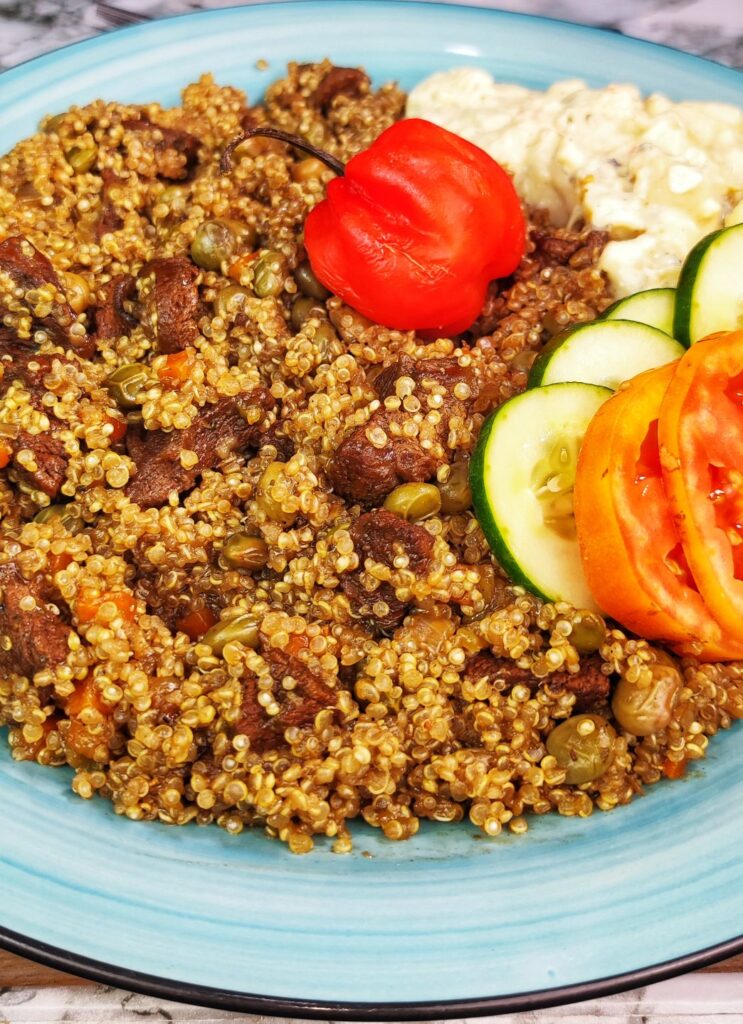
BEEF & GREEN PEAS QUINOA “PELAU”
Description
Pelau is another Trinibagonian food that is both respected and revered in many a household. Typically made by stewing some well seasoned chicken or beef and the adding white rice, green or dried pigeon peas, coconut milk, carrots, pumpkin, ginger and other delicious aromatics and cooked down into a very delicious one pot meal.
Ingredients
Instructions
-
Add green seasoning to beef cubes and set aside to marinate.
-
In a large saucepan over medium-high heat, add brown sugar. Cook for 5-6 minutes until the sugar liquefies and turns golden. Stir until it becomes foamy and slightly dark.
-
Add the marinated beef to the caramelized sugar, stirring to coat the beef. Allow it to cook in its own juices for 5-6 minutes.
-
Add the green pigeon peas, diced carrot, grated ginger, minced garlic, chopped pimentos, chopped celery, and hot pepper. Mix well. Pour in 1 cup of water and 1 cup of coconut milk. Increase the heat to high and cook for 20-25 minutes or until the peas have softened.
-
Once the peas have softened and most of the liquid has cooked off, add the rinsed quinoa, remaining 1 cup of coconut milk, and 2 cups of water. Season with salt and black pepper. Bring to a simmer and cook on medium heat for 20-25 minutes or until almost all of the liquid has been absorbed (approximately 95%).
-
Turn off the heat but leave the saucepan on the hot stove. Cover the quinoa with a lid and let it sit for 10-15 minutes to absorb any remaining liquid.
-
Serve with desired sides such as sweet potato, potato salad, coleslaw, boiled plantains, or fresh salad. Enjoy.
Note
- Marinating the Beef:
- For the best flavor, marinate the beef for at least 30 minutes (or up to overnight) in the refrigerator. This allows the green seasoning to penetrate the meat.
- Caramelizing Sugar:
- Watch the sugar closely while caramelizing, as it can burn quickly. Stir gently and consistently to ensure even cooking.
- If the sugar hardens before the beef is added, you can add a splash of water to re-liquefy it.
- Searing the Beef:
- For a deeper flavor, consider searing the beef in batches. This prevents overcrowding the pan and allows for better caramelization.
- Cooking Quinoa:
- Rinse quinoa thoroughly under cold water before cooking to remove its natural bitterness.
- Use a ratio of 1 cup quinoa to 2 cups liquid for perfect cooking. Adjust based on the specific type of quinoa and desired texture.
- Vegetable Preparation:
- Dice vegetables uniformly to ensure even cooking. Smaller pieces will cook faster and blend well with the quinoa.
- Adjusting Liquid:
- If you prefer a saucier dish, you can add more coconut milk or broth when cooking the quinoa.
- If the mixture seems too dry, add a bit more water during the cooking process.
- Cooking Time:
- Cooking times may vary based on your stove and cookware. Check for doneness periodically, especially when cooking the quinoa, to prevent overcooking.
- Resting the Dish:
- Allow the dish to rest after cooking. This helps the flavors meld together and allows any remaining liquid to be absorbed.
- Serving Suggestions:
- Garnish with fresh herbs (like cilantro or parsley) for added freshness.
- Consider serving with a squeeze of lime or lemon juice for brightness.
- Storage Tips:
- Leftovers can be stored in an airtight container in the refrigerator for up to 3 days. Reheat gently on the stove or in the microwave.
- This dish can also be frozen. Portion it out and freeze in airtight containers for up to 3 months.
